By tracking both games and apps, GameRefinery by Liftoff could see the conditions for this kind of crossover taking shape.
And with hybrid engagement already taking shape, staying ahead of these developments is becoming increasingly important. GameRefinery and Liftoff help their partners understand which engagement mechanics resonate with audiences and how to put those insights to use. As the market continues to evolve, keeping up with emerging trends, features, and motivational drivers is key to identifying new opportunities.
Hybrid engagement in action: inside Duolingo x Brawl Stars
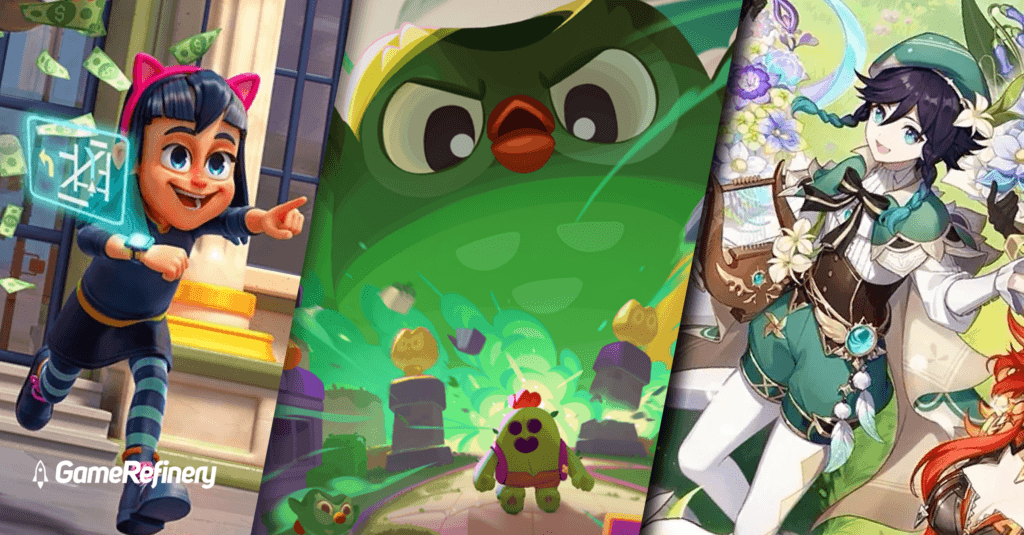
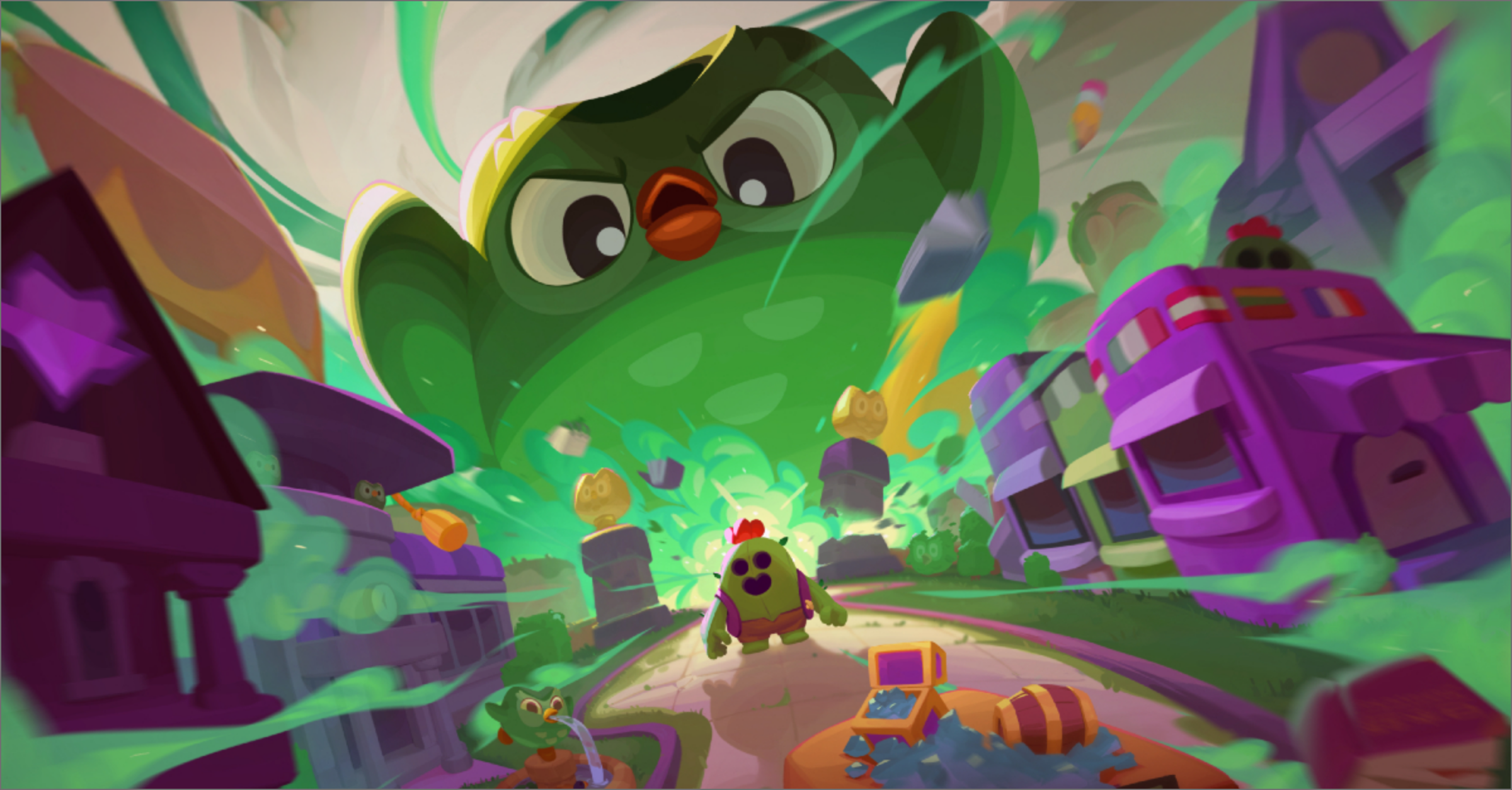
For twelve days in September, the green owl that nudges millions of language learners to maintain their streaks entered Starr Park as a raid boss. From September 19 to 30, Supercell’s Brawl Stars and Duolingo ran a two-way crossover, building on weeks of their mascots trading jabs on social media.
Games often partner with films, anime, and other games. A leading midcore game handing its stage to a learning app is more unusual. Because Liftoff tracks games through GameRefinery and apps through AppRefinery, we could see the conditions for this kind of crossover taking shape.
Duo in Starr Park, Spike in Duolingo
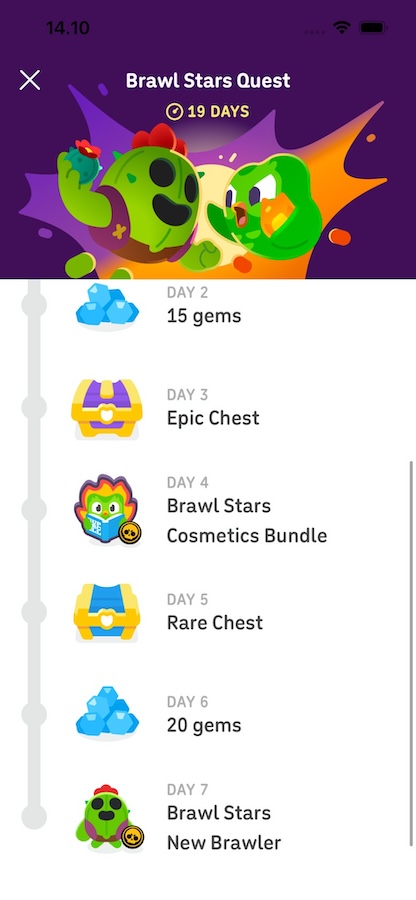
In Duolingo, a limited-time collaboration Quest rewarded daily lessons for seven days with items for both apps, including Chaos Drops, cosmetics, and the legendary Brawler Spike for Brawl Stars. Players claimed the Brawl Stars rewards by opening the game from inside Duolingo, creating a direct incentive to install or return to the game.
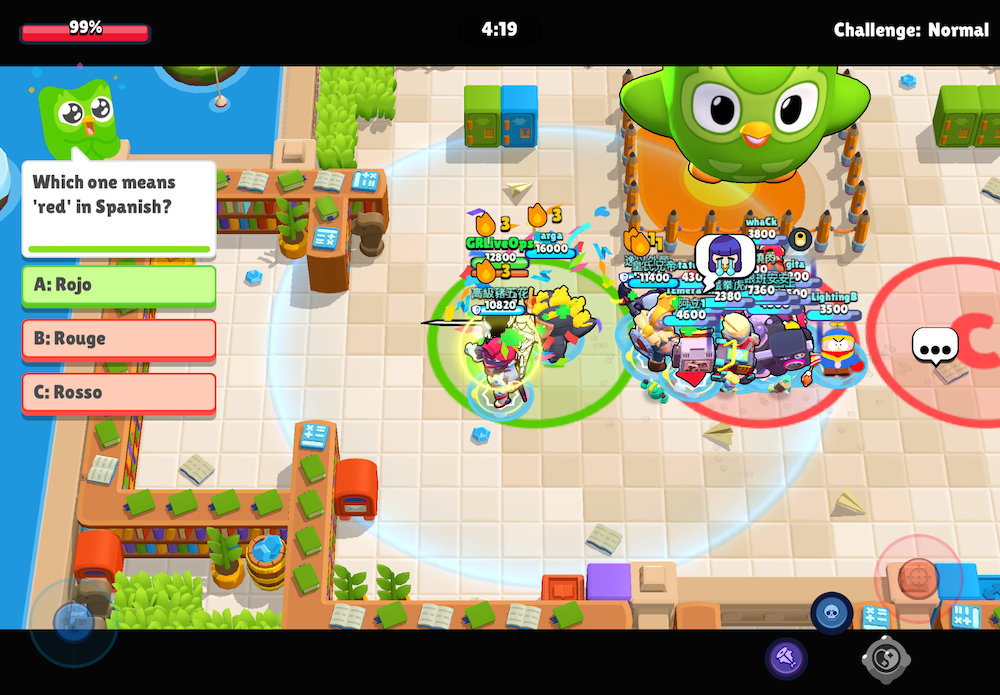
In Brawl Stars, Duo appeared in boss fights that alternated between language quizzes and attack phases. Players answered by moving into the correct zone: right answers built a Hot Streak buff, while wrong ones reset it and cost health.
Brawl Stars kept the rivalry going on social media with phased community tasks. “Classroom” phases set shared player goals, such as 40 million Duo Boss Fight wins, while “Detention” phases announced quirky tasks in-game and on socials. Brawl Stars also held a quiz-based gem giveaway.
Key takeaway: Shared mechanics joined the brands, social media kept the rivalry visible, and cross-app rewards moved users between the apps.
Apps and games were already converging
Apps are continuously adding more game-like systems. AppRefinery’s lookout on 2026 consumer app trends noted streaks and currencies already common, with social features becoming a stronger retention driver. Broader LiveOps systems, such as collectible albums, were also noted as an emerging development.
Duolingo’s experience already revolved around gamified elements like streaks, leagues, tasks, and timed challenges. It had trialed a gaming collaboration with Genshin Impact in December 2025, and also ran its first collectible event alongside the Brawl Stars collaboration.
Games, meanwhile, have been widening their partner pool. Brawl Stars has worked with IPs ranging from TV and games to sports brands. Supercell isn’t the only one: just in September, we also saw Playtika’s Bingo Blitz add short-form drama episodes into their event rewards as they partnered with Shortical, a microdrama platform.
Audiences in both categories respond to similar incentives: steady progress, visible milestones, competition, and a reason to return tomorrow. That shared engagement playbook makes app-game partnerships a logical next step.
Key takeaway: Apps were becoming more game-like, games were looking further afield for partners, and their audiences already valued similar engagement loops.
Hybrid engagement opens new routes to growth
Hybrid engagement begins when apps and games stop treating each other as separate markets and start trading audiences, mechanics, and rewards. Duolingo and Brawl Stars compete for the same few minutes of someone’s day; this crossover showed what happens when they share them.
For app and game teams, hybridization like this changes the growth landscape. Competition for attention may be wider, but app-game partnerships can also unlock access to new potential audiences. Duolingo x Brawl Stars shows that connected experiences and cross-app rewards can turn these partnerships into real two-way funnels.
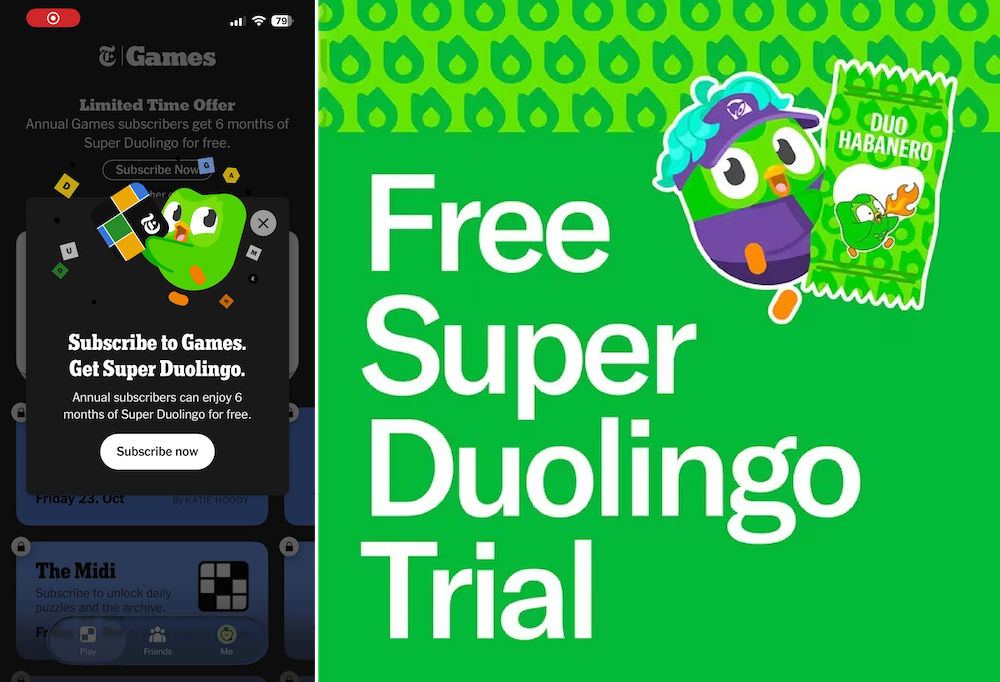
Duolingo is also already extending the model by turning its Super Duolingo subscription into the prize in two new partnerships. In October, annual NYT Games subscribers received six months of Super Duolingo, while Taco Bell offered its Rewards members a free month of Super Duolingo around Global Taco Day.
Hybrid partnerships are still early, which is why they matter now. The first movers are shaping the formats, securing well-matched partners, and learning what converts.
Key takeaway: The overlap between apps and games is becoming a growth lever, and teams watching both sides will be better placed to act.
What comes next
Expect to see more hybrid partnerships emerging as the gap between the non-gaming and gaming closes. Cross-app rewards are likely to become a more familiar tool for acquisition and reactivation, with apps that already have gamified systems in place being the most natural partners for games.
As the line between apps and games blurs further, some of the most interesting growth opportunities will sit where they meet. The strongest collaborations are built on genuine IP synergy and by making each brand feel native to the other’s world, Duolingo x Brawl Stars has set an early benchmark for app-game crossovers.
Key takeaway: Looking ahead, app-game partnerships offer a framework for growth when shared engagement mechanics are paired with authentic brand alignment.
The full picture takes watching both sides
Hybrid engagement happens between categories, where single-category data has blind spots. GameRefinery tracks live events, collaborations, and performance across leading mobile games; AppRefinery tracks the features and engagement strategies shaping consumer apps. Together, they give Liftoff a broader view. As more crossovers launch, we’ll keep tracking which pairings work, how they are built, and what they mean for acquisition and retention.
Explore the full crossover in the GameRefinery Live Event Tracker, or book an AppRefinery demo to see what the app side is building next.