If you’re a Western mobile publisher keeping tabs on the charts this month, you might want to look away now, as we have yet more examples of Chinese studios producing games that are out-executing and outperforming their non-Chinese competitors. In particular, we look at Century Games, which seems to have not 1 but 4 games performing well in the very competitive merge-2 genre, but as usual, there are strong performers right across the board from China-based companies.
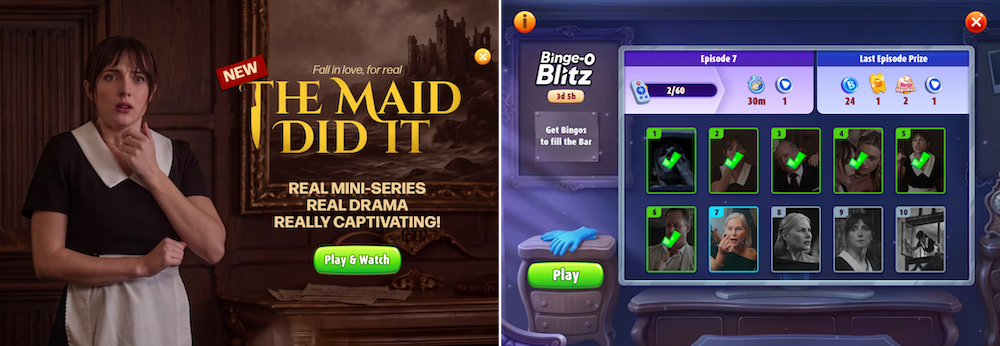
September also saw some creative brand collaborations that really caught our eye, with the Brawl Stars crossover with language learning app Duolingo a particular standout. It’s great to see non-gaming IP working so well in a mobile gaming format. Another interesting idea came from Bingo Blitz, which teamed up in September with short-form drama platform Shortical for Binge-o-Blitz: The Maid Did It!, where gameplay rewards players with the ability to watch episodes of the microdrama, using the ‘got to watch the next episode’ impulse to drive engagement with the game.
For more details on these updates, titles, and the latest mobile market trends, don’t miss out on our full Analyst Bulletin below.
September’s casual game updates
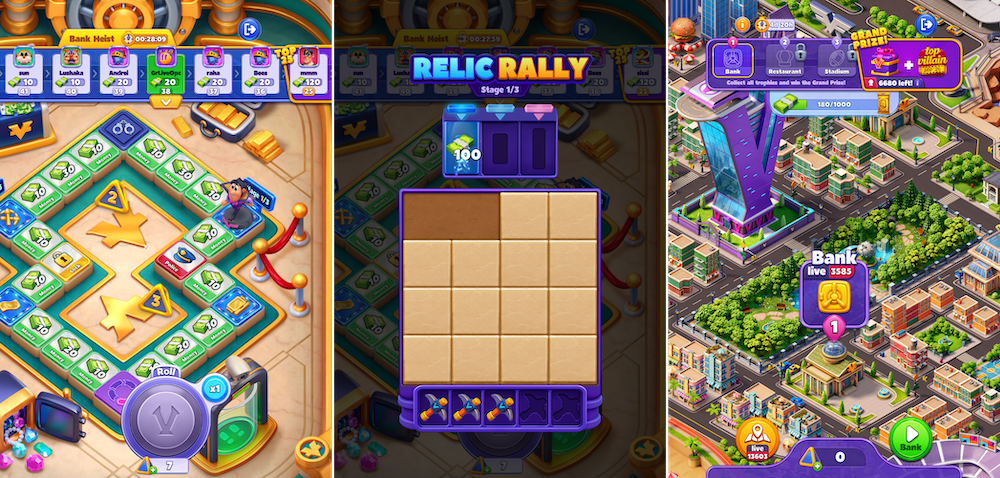
It wasn’t long before a studio looking at the surge in popularity of the board game event in Monopoly GO! decided that a single looping board wasn’t chaotic enough. So in September, Match Villains introduced Villain City, an ambitious update that transforms the simple dice-rolling side feature into a full-blown, multi-tiered, world-building meta-layer.
Rather than keeping players on a traditional square board-game layout, Villain City spreads out across an entire metropolitan area and includes seven different stages. Players move from the Bank and Restaurant all the way to the Theater, with each landmark having its own themed Heist board. Prizes can be collected by rolling dice won by completing the core puzzle levels, but advancement is controlled by a tough qualification race. At each Heist board, players are divided into competitive groups, and only the fastest ones survive to proceed to the next district. For example, at the Bank, only the top 25 fastest of 50 players earn the building’s trophy and gain access to the next neighborhood. When a player has won all seven trophies, they complete the city and claim the Grand Prize.
To make sure players aren’t just stuck in a gameplay loop of mindlessly tossing dice, the boards are packed with interactive pit stops. Landing on designated tiles triggers various minigames, ranging from an excavation digging challenge and a hacking terminal minigame to a physics-fueled plinko drop where a bouncing ball decides your fortune. These diversions inject some much-needed agency into what is often a fairly passive event framework, making the journey feel far more varied than a standard trek around the board.
The standout feature of the game, however, is its world-building. Players of Match Villains have spent years appreciating the game’s unique universe via static 2D backgrounds and short narrative cutscenes, but Villain City now allows them to move around this world physically. It’s a good example of casual puzzle games opting for spatial immersion in order to differentiate themselves from the competition.
The obvious drawback, however, is architectural bloat: stacking qualification heats, multiple stages, and custom minigames onto the core puzzle system greatly increases production costs and makes it more difficult for players to get started. The big question moving forward is whether Match Villains will treat Villain City as a complex, repeatable LiveOps template, or whether it’s merely exploring the possibility of creating a permanent secondary world layer.
Additional casual gaming highlights and news
Games using an ‘arrow’ mechanic first caught the attention of the industry in early 2026 via simple hyper-casual titles such as Lessmore’s Arrows, Arrowscapes (which is now known as Color Maze), and Amaze GO!. These pioneers stayed with minimal boards that had no timers or obstacles, relied almost entirely on intrusive advertisements for revenue, and, as expected, reached a monetary ceiling well below the top 200 Grossing list. Lion Studios’ Point Out (formerly known as Arrow Out) was the first to take the concept in a hybrid-casual direction at the end of April by adding a coin economy, boosters, and lives, and achieved a short appearance in the top 200 Grossing chart before losing momentum.
September proved that adding traditional casual scaffolding to this core mechanic can yield serious dividends. GOODROID’s CubeAway followed the hybrid-casual approach into three dimensions by sticking arrows to a rotating 3D cube while imposing strict movement limits. The title has been steadily scaling since August and continued its upward trajectory this month, peaking at #4 in the top downloads chart and #140 in top-grossing on September 22. Meanwhile, Grand Games chose a full-casual makeover for Maze Out, outfitting the experience with timed stages, board blockers, boosters, and a bustling LiveOps calendar. This is another title that has steadily grown in revenue despite a cooling in downloads since its April debut, breaking into the top 200 Grossing chart in early October and continuing its upward trajectory.
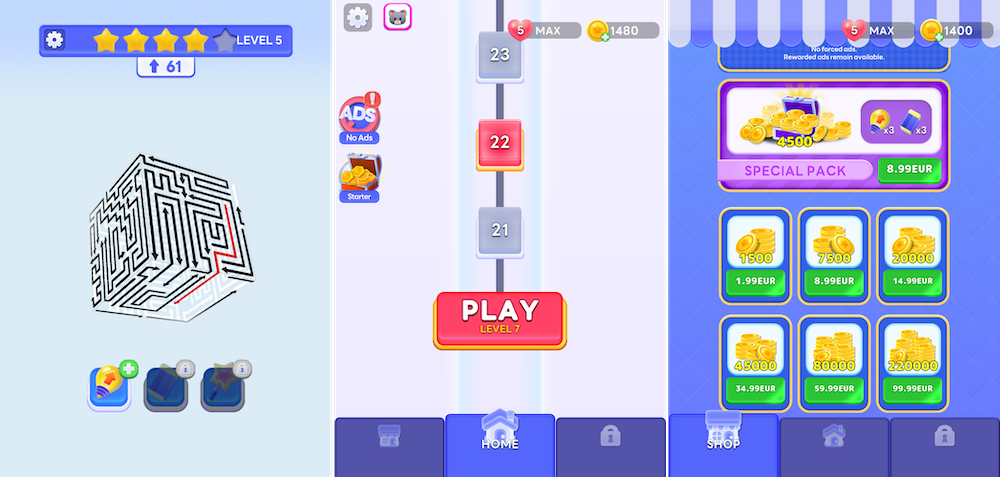
Maze Out followed the Grand Games’ approach, which is now essentially something of an art form: identify a basic, hyper-casual feature that has already demonstrated its ability to capture players’ attention, remove the advertising, and repackage it as a more polished casual game.
The studio has applied exactly the same strategy with water sorting in Magic Sort and with block sorting in Block Out, becoming a leader in both categories. Although hyper-casual game mechanics are still excellent for attracting new players at the top of the funnel, sustainable in-app purchase revenues clearly belong to studios that are willing to wrap these mechanics in well-polished casual economies.
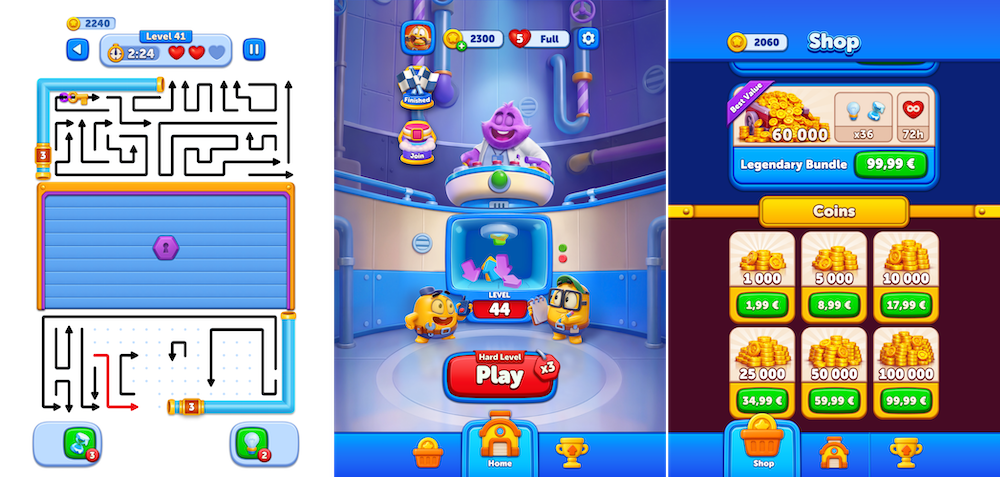
Nowhere is the dominance of Chinese publishers more clear than in the merge-2 genre, where Western studios are increasingly playing catch-up. Century Games, which has already gained a reputation for its 4X strategy titles such as Whiteout Survival and Kingshot, has shown what happens when a leading publisher puts its LiveOps systems to work with casual puzzle games. In September, the studio had four different merge-2 games rising up the US charts, all of them improving their sustained grossing position during that month.
Leading the charge was Tasty Travels, which reached the top 10 grossing chart on both September 1 and September 8. It remained in the top 20 throughout the month, carrying on its upward trend so that by September 15, it had reached position #15 in the top-grossing. This result firmly establishes it as the second-highest-earning merge-2 game in the United States behind Gossip Harbor, leaving competitors such as Merge Cooking (which ranked #31 in the top-grossing) in the dust. LiveOps moved at a rapid pace, linking the map-exploration event Wonder Quest to the task-based Stamp Trail, both of which funneled into seasonal card albums.
At the end of April, Century Games launched Just Desserts, which became the fastest-growing title in the portfolio. Its revenues have been rising steadily since early August, entering the top 200 grossing chart on September 24 and reaching a peak of #154 in the top-grossing on October 1. Remarkably, it achieved this with virtually zero organic download support, floating comfortably between #700 and #840 in the top downloads chart while per-user monetization did the heavy lifting.
The other two merge-2’s from Century Games have shown a similar level of execution. Hotel Legacy, which has been available since January, stayed consistently between #71 and #92 in the top-grossing throughout September, reaching a peak on September 29 when its position improved from #115 to #88, while at the same time making a late-month move into #70 in the top downloads chart. Family Farm Merge, which came out in May, saw an early surge in downloads, ranking between #46 and #90 on the top downloads chart, though this fell to about #200 by the end of the month. Nevertheless, its revenues continued to climb, reaching its peak at #125 on the top-grossing chart on September 29. Century Games has therefore turned the merge-2 genre into a model for mastering monetization.
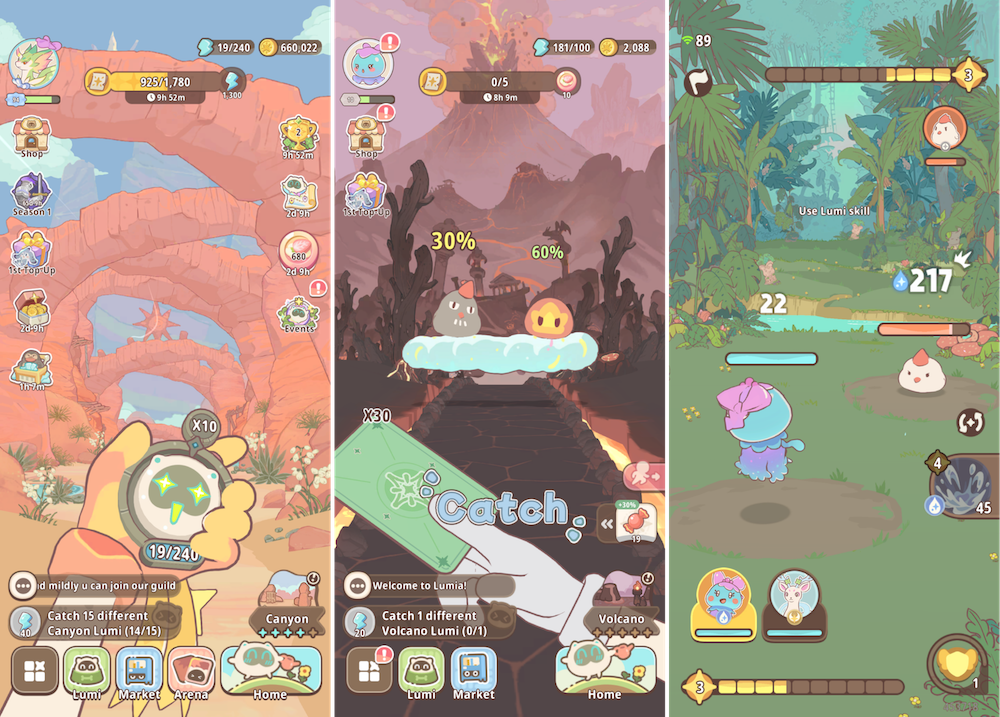
The creature-capturing arena also saw an influx of new entrants from Chinese studios in September. Lumi Master combined a casual casino coin-pusher loop with Pokémon Go-inspired monster collecting. Players have to use up their stamina in order to spin and get random results, which causes monster capture encounters or aggressive PvP raids. There’s an additional layer of gameplay that involves building up a player’s town to gain spin stamina while upgrading their collection of creatures at the same time. The game saw modest traction in the United States, lingering between #100 and #200 in top-grossing, but it found a warmer reception in Japan between #50 and #100 in top-grossing. It performed best at home in China (no surprise there!) where it comfortably hovered in the #20 to #50 range.
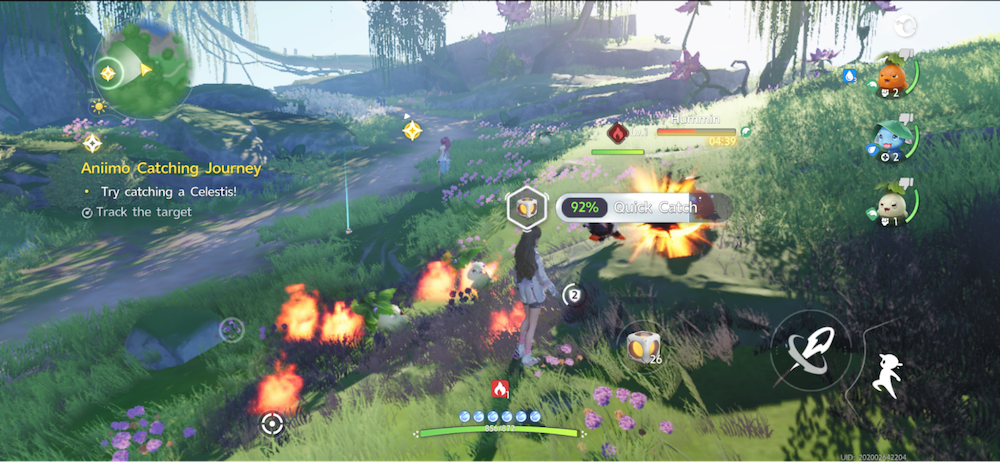
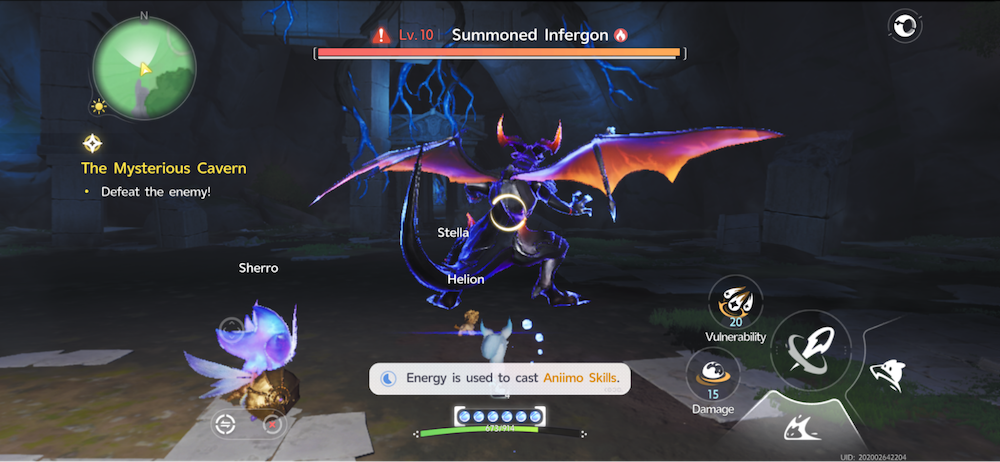
On a much larger scale, FunPlus launched Aniimo, a vast cross-platform open-world action RPG set in a fantastical continent called Idyll. The game has a strong emphasis on creature catching with a special ‘Twine’ mechanic that lets players fuse directly with their monsters during combat. It has impressive visuals throughout, and while that only resulted in the game staying for three days in the US top 200 grossing chart on mobile, its already gained huge popularity on desktop, maintaining over 100,000 concurrent players every day on Steam during that month.
September also saw a reminder that some of the best IP collaborations in mobile games don’t come from the gaming world at all. In a clever bit of content cross-pollination, Bingo Blitz teamed up with short-form drama platform Shortical for Binge-o-Blitz: The Maid Did It!. Players cleared bingo cards to gain in-game currency while accessing actual episodes of the namesake melodrama, streaming the juicy soap opera directly within the game client. Forcing players to hit play on each episode to unlock their next rewards made guilty-pleasure video consumption a direct driver of the core game loop.
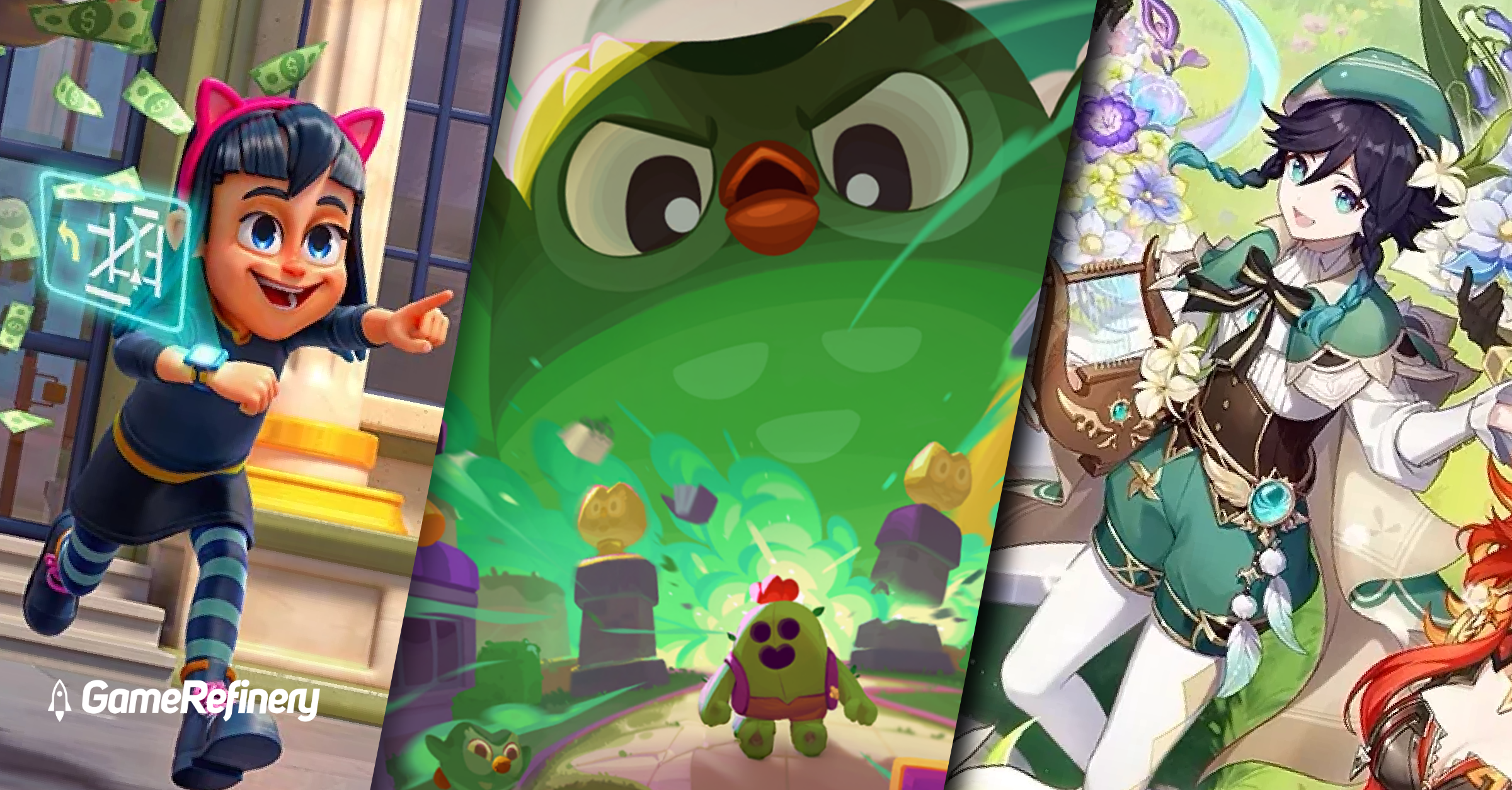
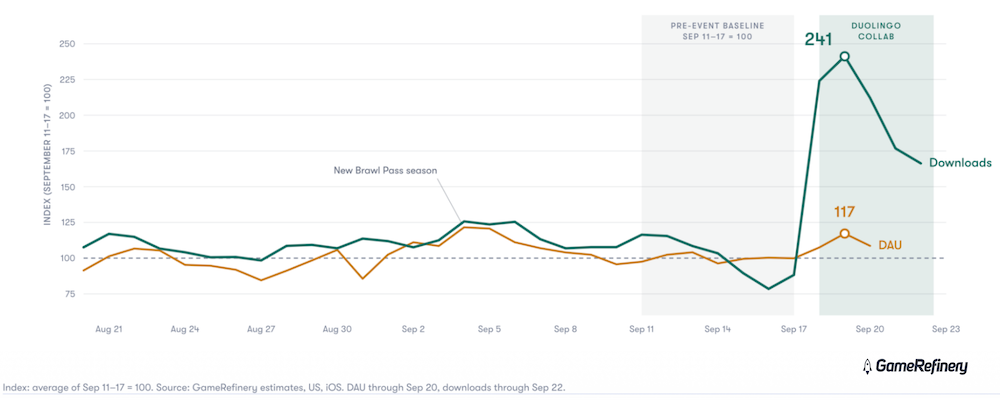
Not to be outdone in terms of internet absurdity, Supercell’s Brawl Stars teamed up with Duolingo between September 19 and September 30, taking advantage of the wild social media feud between the Duo owl and Brawl Stars’ own Spike.
In the language app, completing a seven-day lesson streak yielded exclusive Brawl Stars cosmetics, loot drops, and the legendary brawler Spike himself, requiring players to fire up Brawl Stars to claim the loot. On the Brawl Stars side, the crossover introduced Duo Boss Fight modes (spanning 3v1, 5v1, and a terrifying 20v1 raid), blending trivia questions with combat, as well as community events focused on the Classroom and Detention phases.
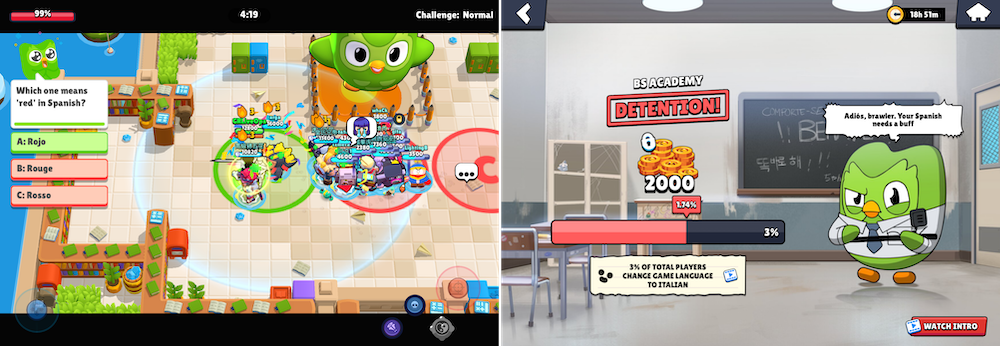
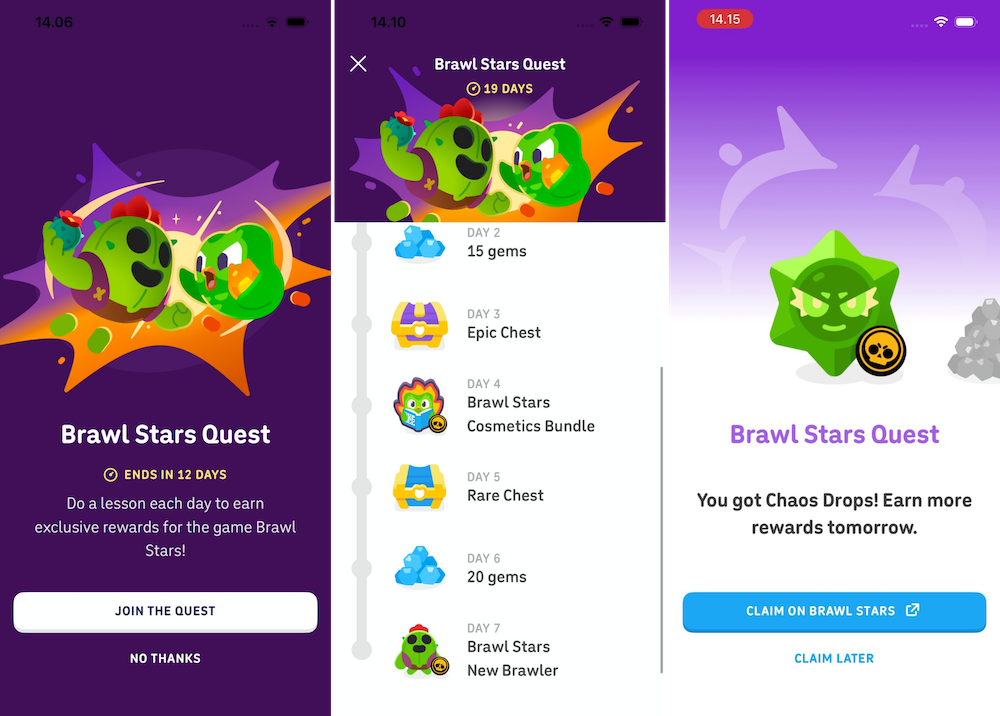
The partnership sparked a healthy bump in downloads and a modest increase in daily active users, which goes to show that using an owl’s guilt-inducing language reminders can be a surprisingly effective way to acquire new users.
September’s midcore game updates
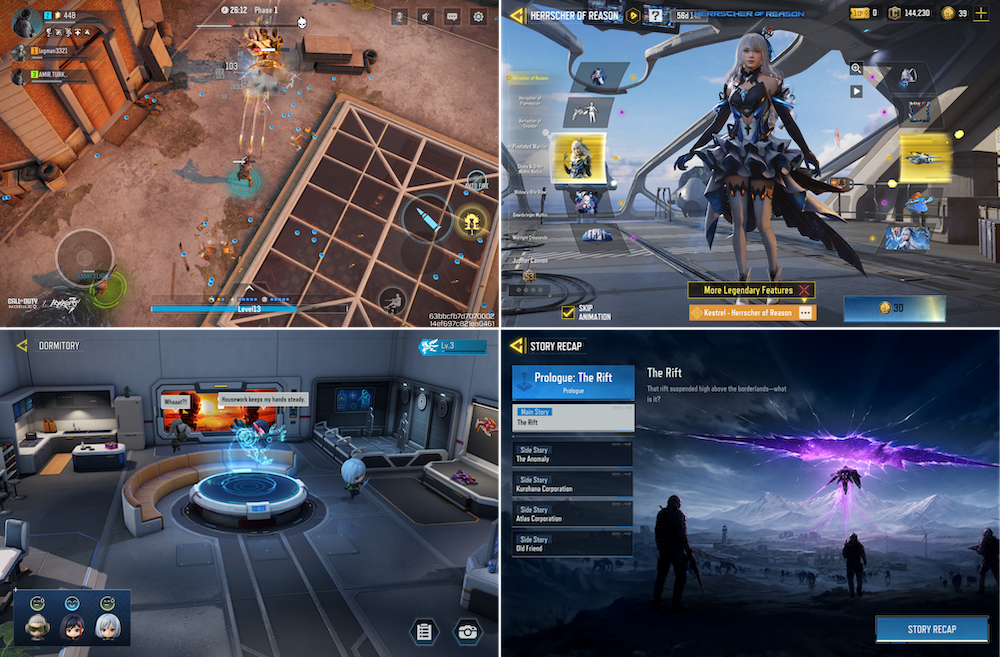
Call of Duty: Mobile launched a three-month crossover event with HoYoverse’s Honkai Impact 3rd, combining tactical military grit and colorful anime aesthetics. The event was structured around a dedicated hub with interconnected progression systems, with the main feature being Gleaming Front, a cooperative top-down PvE shooter mode where teams of three fight waves of enemies and draft randomized upgrades to build custom Operators.
Progress in this mode contributed to a collaborative reward track, rankings, and daily interactions with chibi characters. The Battle Royale mode also included Honkai Beasts as roaming enemies. Monetization included an unlockable Mythic weapon and multiple gacha pools featuring themed weapons, evolvable Legendary Operators, and upgrade shards.
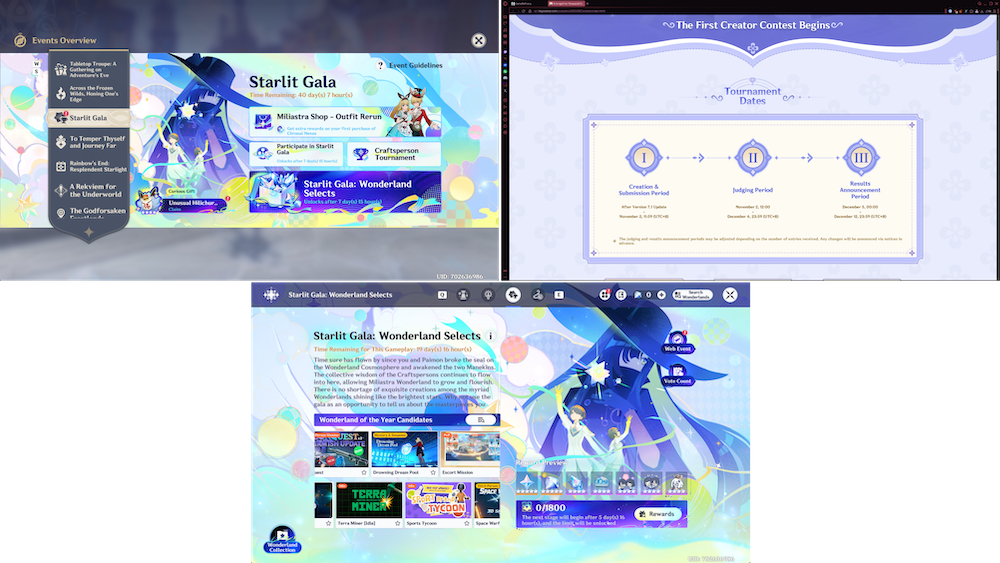
To celebrate its sixth anniversary, Genshin Impact unveiled Miliastra Wonderland – Starlit Gala: Wonderland Selects. The event focused on user-generated content (UGC) by inviting players to build custom sandbox maps in its Miliastra Wonderland suite. Meanwhile, the community test-drove and voted on their favorite maps and creations. Beyond the usual anniversary task boards and cosmetic discounts, the real attention-grabber was the debut of Creation Tickets that were awarded to top-voted creators, which could be cashed out for real-world money. It’s a bold, telling experiment from HoYoverse, dropping strong hints that the studio may be interested in transforming Genshin’s creative modes into a creator-monetized UGC platform to rival Roblox and Fortnite.
Additional midcore gaming highlights and news
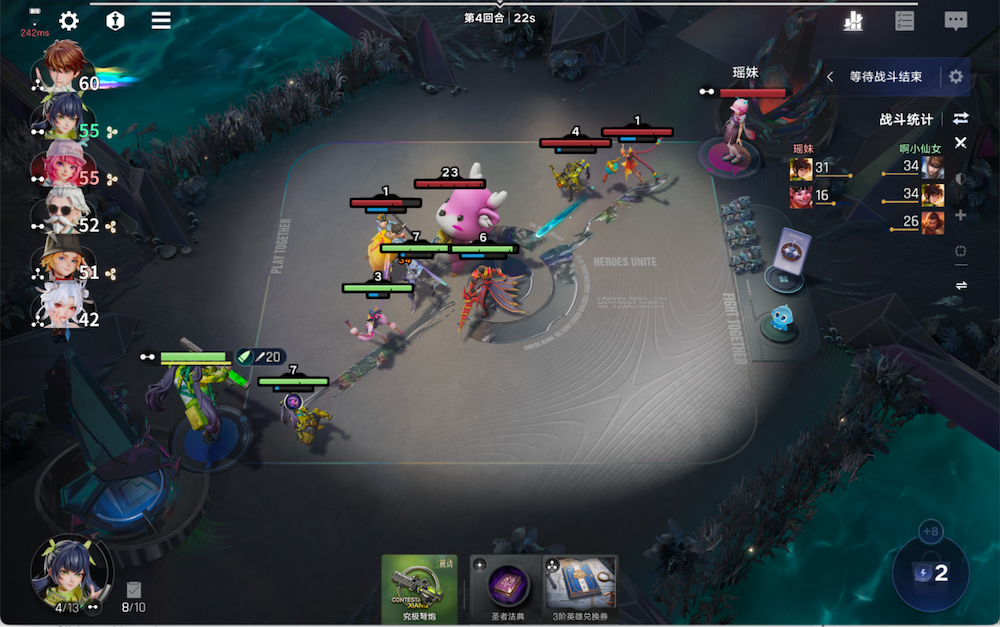
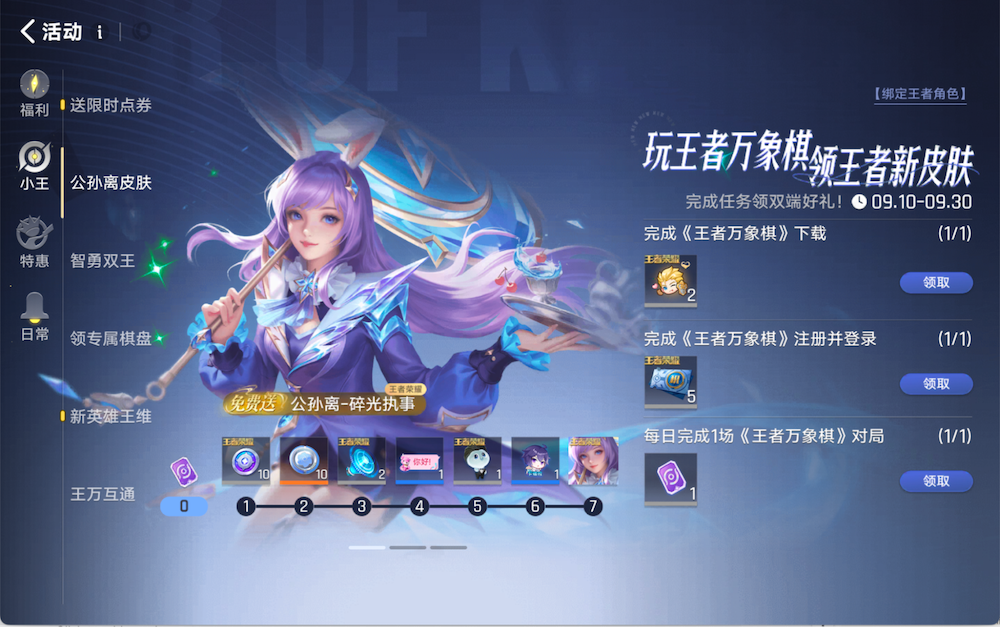
In September, two Teamfight Tactics-style auto-battlers launched with simplified mechanics aimed at lowering the genre’s learning curve. In China, Tencent released Honor of Kings: Ace, which combines its established IP with streamlined board positioning, faster rounds, and a large-scale ecosystem supported by 70 million pre-registrations. The game has held the #1 spot in top downloads since launch, peaking at #5 in top-grossing before stabilizing around #25 later in the month.
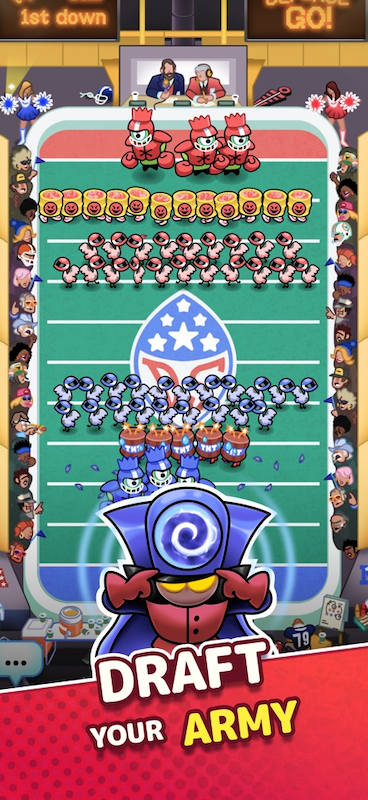
In Western markets, Voodoo’s Draft Showdown entered the top 200 Grossing chart, reaching #153 on September 29. Voodoo boiled the auto-battler down to bare essentials, combining lightning-fast drafting with Clash Royale-style lane combat. Both titles reflect a trend toward making strategy games more accessible, although Voodoo needs to demonstrate that its minimal progression and LiveOps can sustain long-term spending.
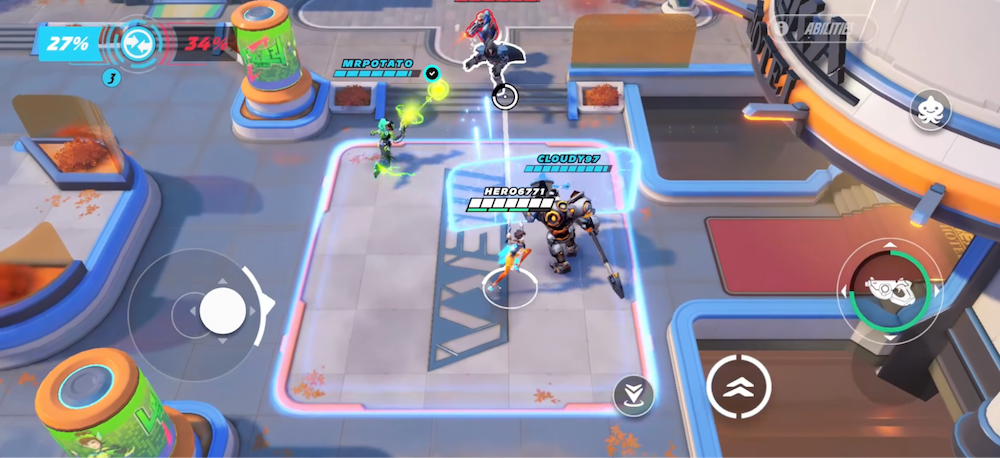
Over in the mobile shooter corner, Blizzard began a Southeast Asian soft launch of Overwatch Rush, a top-down arena hero shooter. Instead of the usual first-person style, the game uses twin-stick touch controls, short match durations, and a starting roster of nine familiar heroes (imagine if Overwatch swapped notes with Brawl Stars, this is what you’d get). Modes include 3v3 and 4v4 Control and Duo Deathmatch, converting Overwatch’s abilities to a mobile format. The current version has limited meta-systems, so long-term retention will depend on Blizzard’s ability to implement frequent seasonal cosmetics and transfer the cadence of its flagship titles into the tricky mobile retention loops.