Toon Blast has run Cannon Fest almost every week since November 2024. This summer, over 30 developers shipped it as a game of its own, with one of the games being a consistent top-10 in the US download rankings.
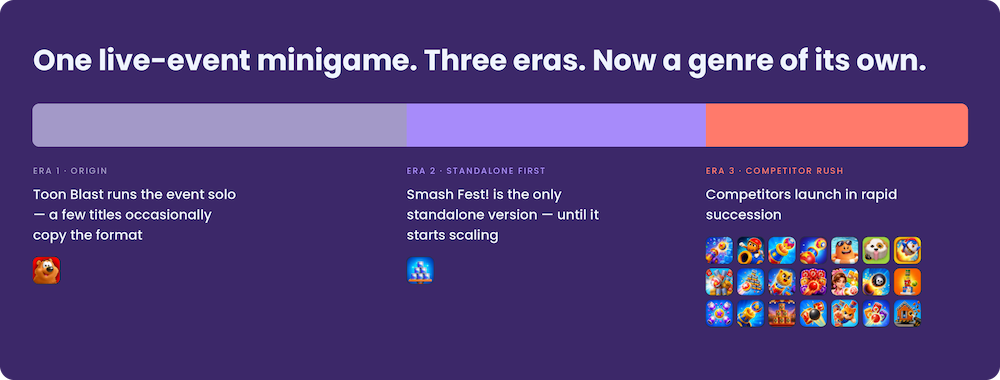
In November 2024, Peak added a minigame to Toon Blast called Cannon Fest. Players earned a cannonball for each level they cleared, then spent those cannonballs knocking down stacks of glass, stone, and wood in a carnival tent. Tap to aim, fire, and watch it fall. Simple and effective.
The event worked well enough, and Peak kept the event running essentially every week without a break.
Then, this summer, other developers began treating the event type as a standalone game, and within a very short timeframe of several weeks, the number of new, competing cannon titles quickly rose to tens of new entries in this subgenre.
Using already proven mechanics
Cloning a mechanic is a bet. Cloning one that a top-grossing puzzle game has run weekly for a year and a half is a much smaller bet, because the hard question, do players enjoy this, is already answered in public.
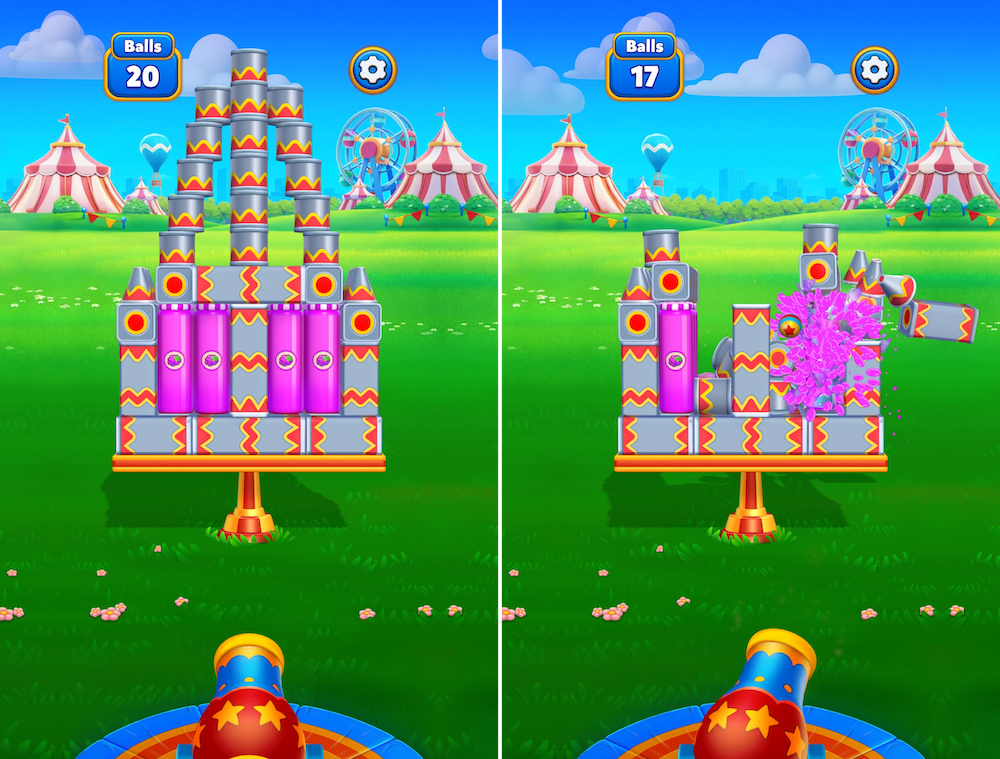
Cannon games have four distinct things going for them that make the core game stick:
01 Nobody needs the tutorial. Only a very simple tapping action is required of the user.
02 The destruction is the reward. Towers come down differently every time, from instant blasts to slow topples, and you decide whether to fire quickly or line up each shot.
03 Losing feels fair. Where you shoot the ball matters, and so does the weight of each material, and as a result, failing the level feels like you could improve rather than the game being unfair.
04 It doesn’t feel like a game you have to beat. There is no pressure to progress. You just blast things and enjoy what happens.
Bigger players are also joining in on the trend
While many of the titles come from relatively unknown developers, there have also been more widely known studios hopping into the trend quickly. Tripledot Studios is the biggest participant, but companies like Supercent, the developer of a recent peculiar success XP Hero, are also hopping in.
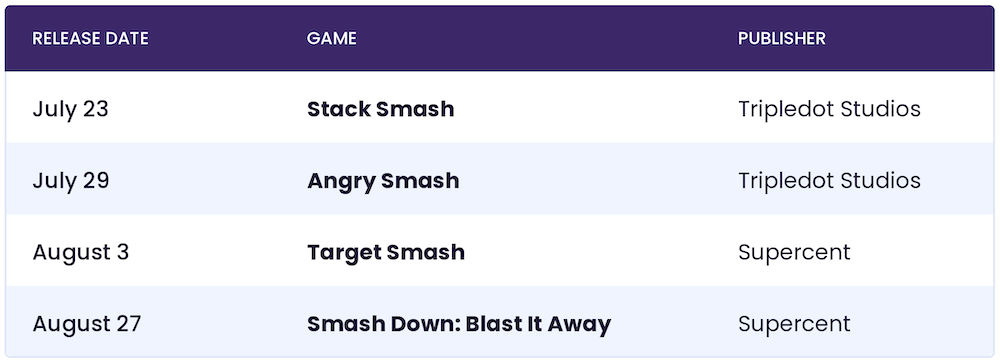
These studios have tried to take the concept away from the carnival fair and into new locations, e.g., a beach & pirate theme and a red-and-white grocery store with familiar-looking products to blast. Deviating from the carnival theme is something that the top performers are also doing, with the theme changing as the player progresses through the levels.
While cores are similar, the meta and events differentiate
The content gap across different Cannon games is significant. Smash Fest! has smooth physics modeling, minimal UI, and the experience is calm and relaxed due to no LiveOps and/or meta progression. Others are building the retention scaffolding that Smash Fest! lacks.
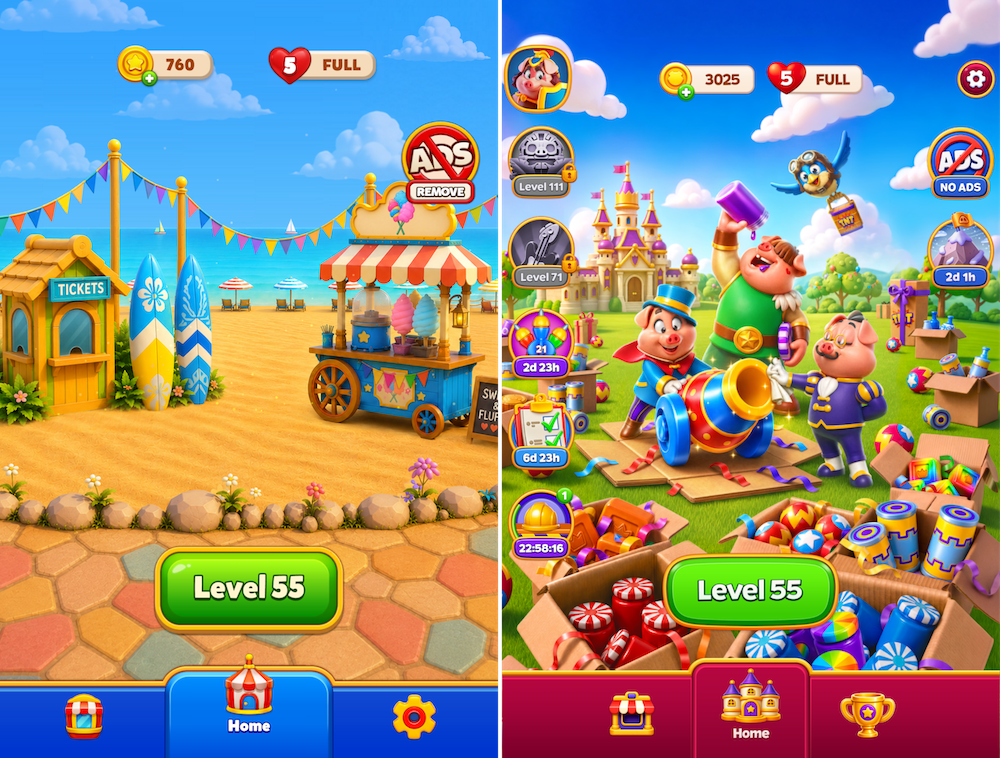
Royal Smash tells players exactly when the next feature unlocks, giving players clear goals to reach. The events utilize leaderboards to motivate competitive players to push further. Named characters appear on loading screens, and endless IAP offers come with a satisfying climbing animation.
Knock Out comes with a LiveOps and feature unlock progression similar to a mainstream casual title. It integrates its “Orange Minion” characters more closely with the experience as you watch their animated versions build a tower in the main menu, and they pop up on the screen celebrating whenever you clear a level. Event types and boosters unlock early and get players up to speed with the full experience much faster than the competitors.
Cannon mechanics form an optimal base for IAA
These games monetize on advertising first, with many titles repeating interstitial ads every three or four levels. In-app purchase options are thin by design: a booster, extra moves, a life refill, and a one-off payment to remove ads. That is an ad-funded business with a purchase option bolted on, not the other way around.
For those who want to enjoy their blasting ad-free, the games offer permanent ad removal at a $7.99 or $9.99 price point.
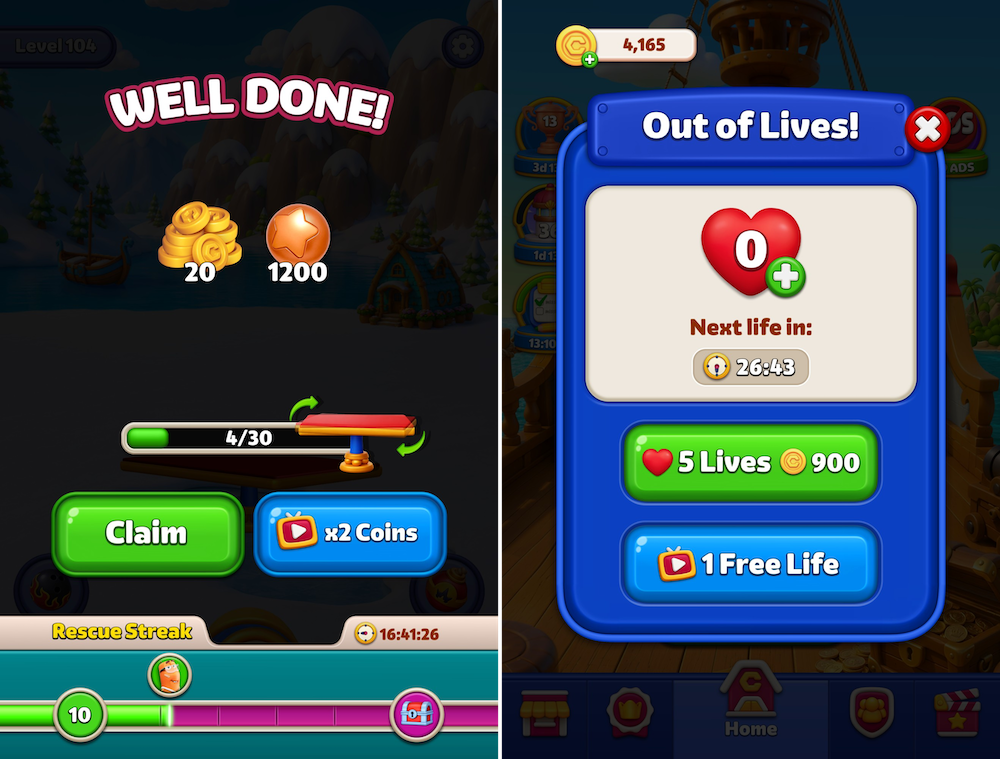
As the games grow past the core-centric approach to more developed LiveOps patterns, the ad placement possibilities also improve further, as ads can be utilized in event formats as well.
Efficient UA and innovative game features are the key to success
How sustaining this core concept is in the long term remains a question mark for now. The simplest concepts can often be exciting at first, but will wear out in the long run. To keep your audience engaged, you need to rigorously test out new game features and new live events to see what resonates with your user base.
A purely IAA game’s whole business is buying players cheaply enough that the ad revenue earned from them exceeds what it cost to acquire them. The margin is far tighter than with games that also utilize in-app purchases, which makes the quality of user acquisition close to the only thing that decides whether it survives.
GameRefinery tracks the live events, features, and monetization of hundreds of games, so you can see new formats, features, and trends spreading while there is still time to act on them.