
Lots of interesting new things happened in March that will have kept mobile gamers busy. Right at the end of the month, we saw the launch of Division Resurgence, the first time for this major Ubisoft IP on mobile. The game looks highly polished and follows the same gameplay modes and storyline as the console/PC games, plus it brings an interesting blend of shooter and RPG gameplay styles.
This issue also shows the still-growing strength of several Chinese publishers in the Western mobile games market. With Chinese publishers dominating the mid-core and 4X genres, we are now seeing games like Gossip Harbor capturing audience share in the Merge genre.
Speaking of competition, Moon Active’s Coin Master – Board Adventure appears to be a strong new challenger to the juggernaut that is Scopely’s Monopoly Go!, with the game climbing the top-grossing charts in March from outside the top 200 to now being within the top 50. Will it climb even higher next month?
You can find more information about these updates and titles, as well as the latest trends from across the mobile market, by checking out our latest Analyst Bulletin below.
March’s casual game updates
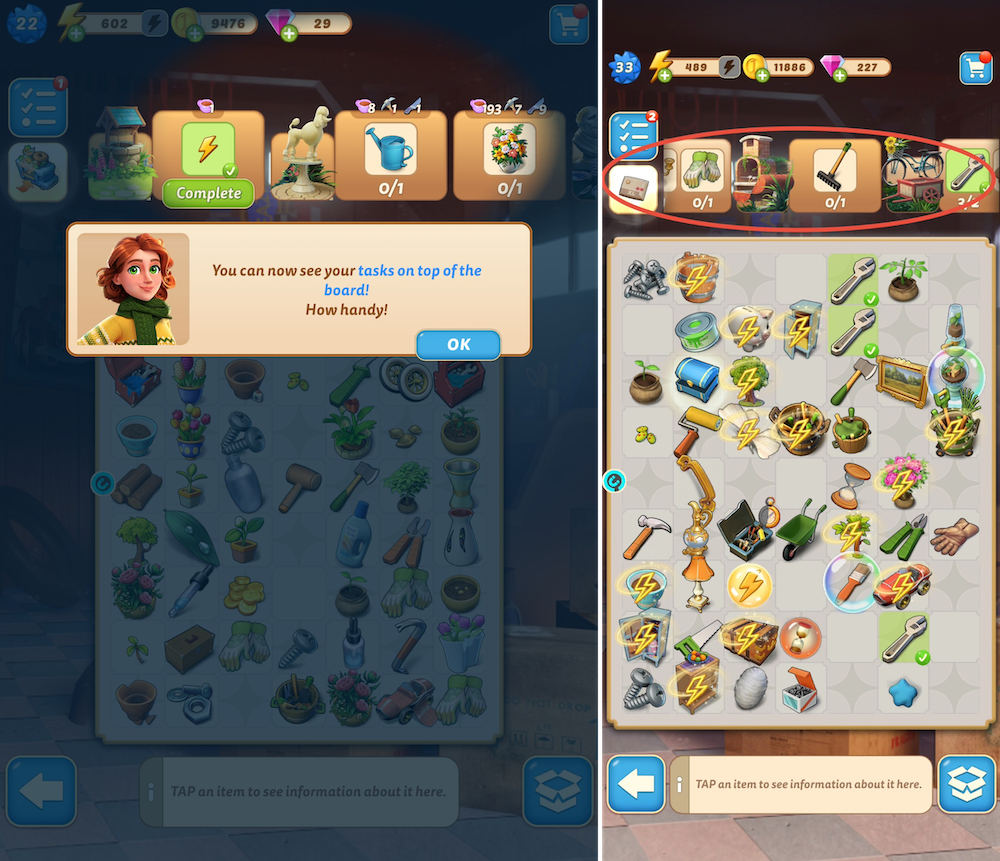
Merge Mansion’s latest update brings the game in line with the rest of the genre in terms of UI. The game, one of the original big hitters in the merge2 genre, once tucked its tasks behind a separate menu. However, nearly every title launched since has displayed tasks directly at the top of the merge board, and it looks like Merge Mansion has joined this trend, creating a UI that reflects the increasing competition coming from games like Gossip Harbor. We’ll see if this has any effect on the game’s performance over the coming months.
In light of the number of games we’ve seen adding multiple event layer expansions (i.e., games which have added additional progression layers directly on top of core loops – think a mini-game within a mini-game), we’ve highlighted several this month:
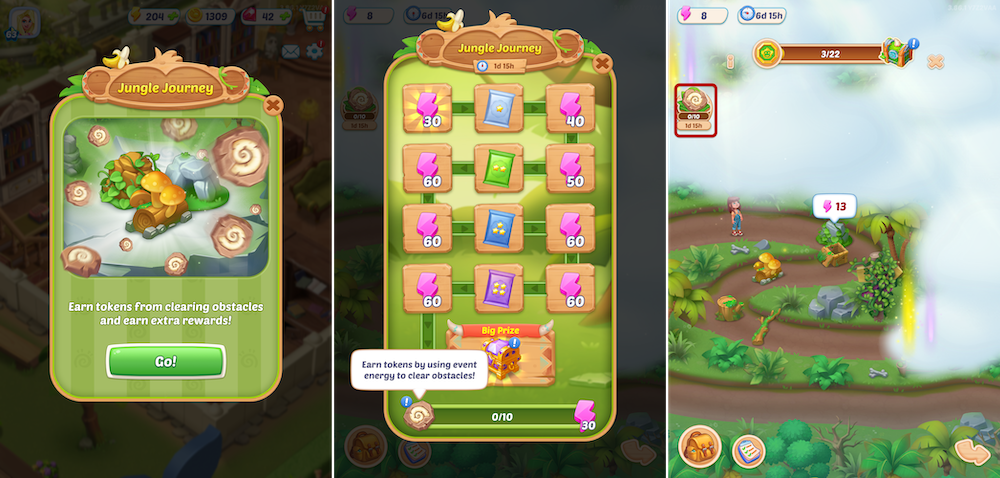
Gossip Harbor is the hugely popular game from publisher Micro Fun, where you help Quinn Castillo rebuild her restaurant on Brimwave Island after it was destroyed by saboteurs. This month, the game has incorporated an expanded progression loop that follows a fairly new minigame blueprint, called Reward Path: Jungle Journey. In this, players follow a task-based reward track that’s fully linked to the minigame’s core loop.
Players earn tokens by clearing (minigame) obstacles, progressing through milestone rewards that feed back into the minigame via additional energy, creating a closed-loop progression system.
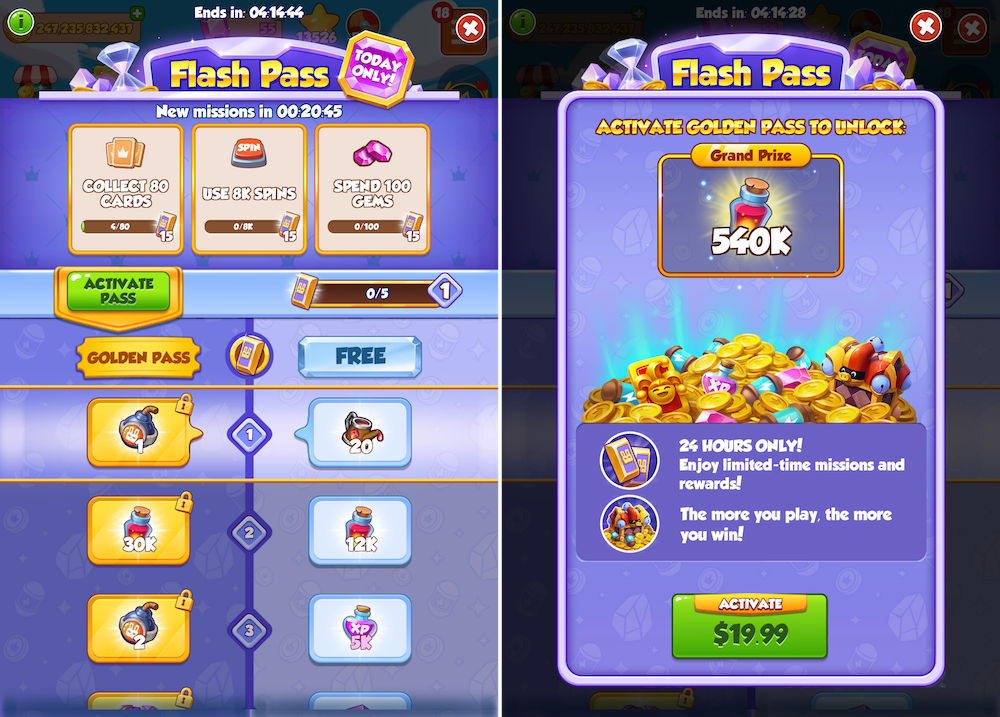
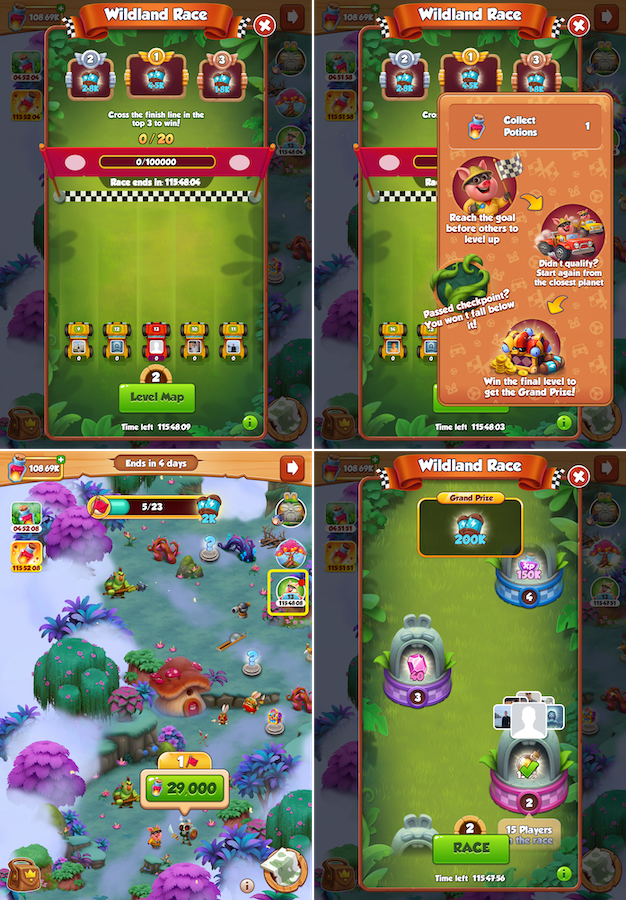
Coin Master, from publisher Moon Active, this month expanded its well-established Wildland Adventure minigame by introducing two dedicated instances of existing event blueprints.
The first of these is Flash Pass: Wildland Adventure. This introduced a short-duration, event-targeted battle pass, aligning most rewards with the concurrent minigame. Players perform core gameplay tasks to earn tiered rewards. This was the first Flash Pass iteration targeted toward a concurrent event.
The second is Wildland Race, which embeds a competitive race system directly into the minigame, with progression driven by collecting the core currency (Potions). Players compete in race rounds by accumulating Potions, with a limited number of qualification spots & additional rewards granted to the top 3 fastest qualifiers in each stage. Each successful qualification advances players along a level-based progression map, unlocking stage rewards.
This layer adds urgency to the minigame, encouraging players to actively return and engage, rather than passively accumulating Potions through core gameplay without immediate time pressure.
In Travel Town, from publisher Moon Active, two different blueprints were expanded:
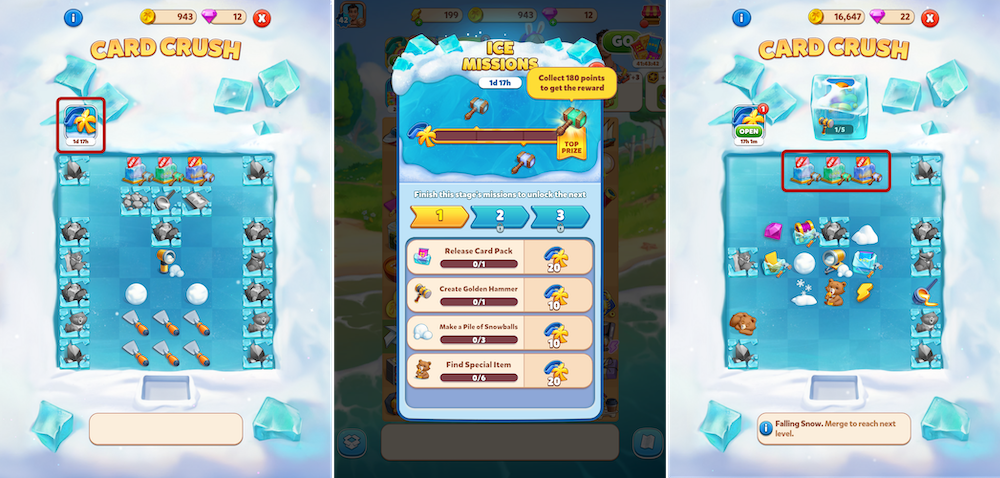
The first is Card Crush 2.0, which has introduced Ice Missions, a task-based layer that adds structured objectives and milestone rewards on top of the merge loop, increasing progression clarity and reward density.
The task system consists of 3 stages, each with 4 event-specific tasks. Each task completed grants event points & progresses a milestone bar tied to stage-based rewards: colored hammers used to unlock additional Grand Prizes.
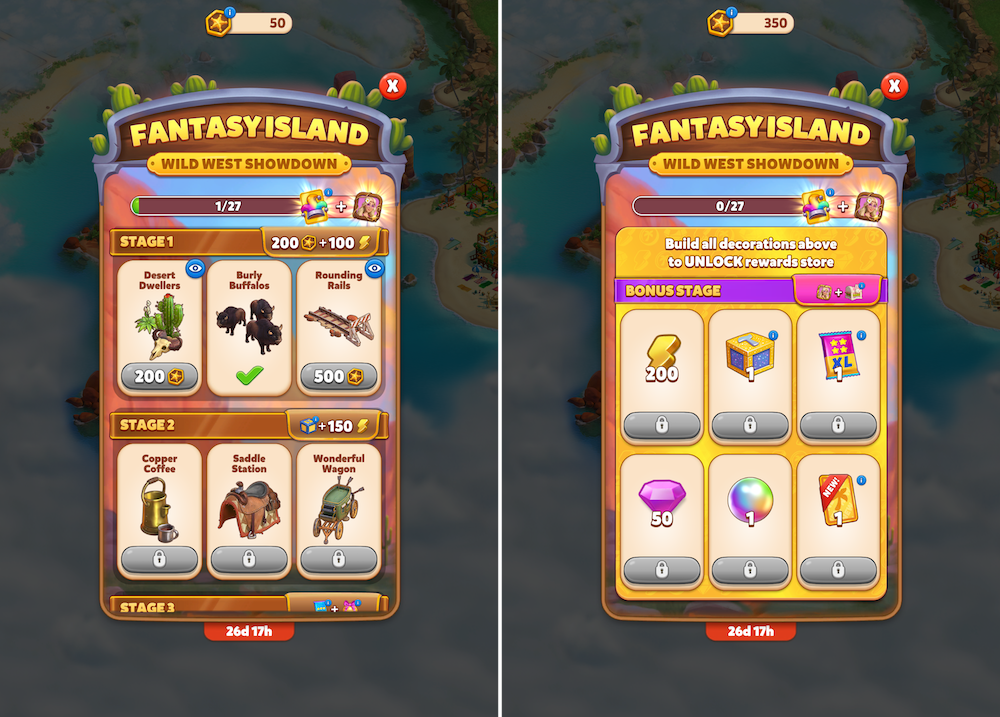
The second is Fantasy Island, the game’s decoration event blueprint. This has introduced a Bonus Stage reward shop, allowing players to spend overflow event points after completing the main progression. The game has previously tried different approaches for the use of overflow event points to add value (example), but this was the first installment directly embedded inside the event itself (not a separate live event)
We like the way this mechanic helps to extend the post-completion engagement and raises the overall reward value for participation.
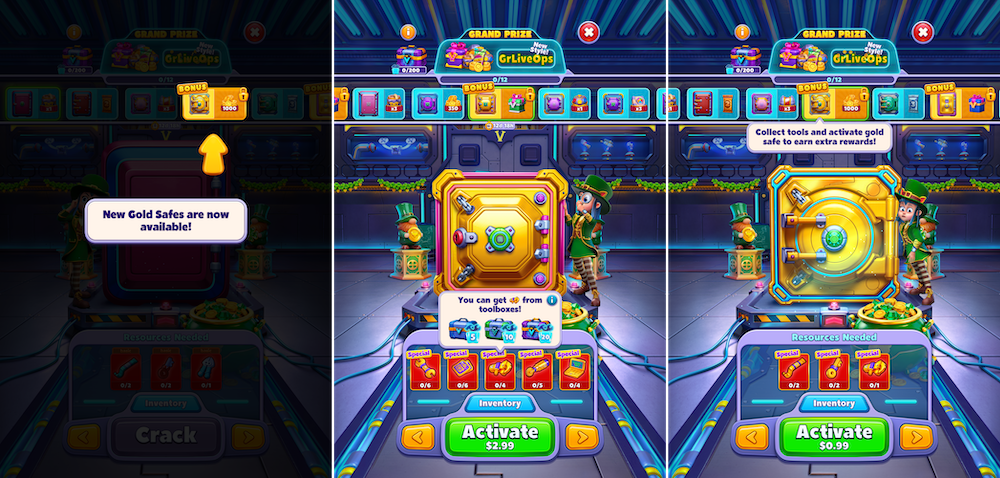
In Match Villains from Good Job Games, the event-within-an-event trend is especially visible through multiple monetized layer expansions across 3 different event types:
- The addition of a second (monetized) progression path to the Safe Crackers: St. Patrick’s event through Golden Safes. This is a parallel progression path with its own resources (Golden Tools), where players must both collect materials and make a purchase to unlock premium rewards. Each safe is progressively more demanding & more expensive to unlock, effectively layering monetization directly onto an existing event loop.
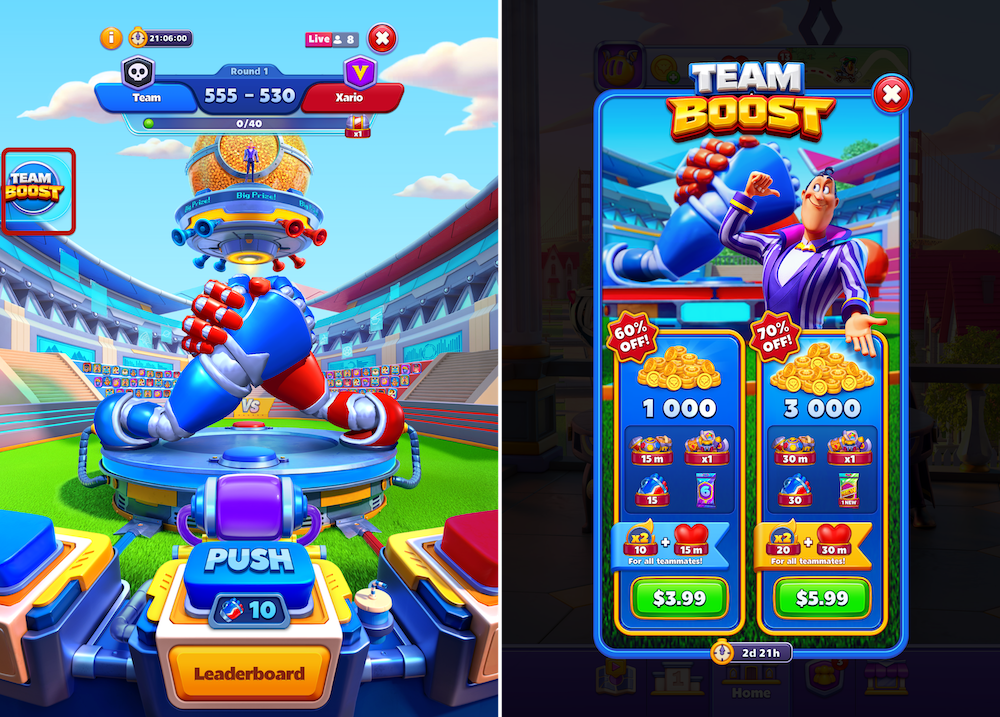
- The Team Duel guild event was expanded with Team Boost, a dual-bundle offer that provides both individual and team-wide rewards.
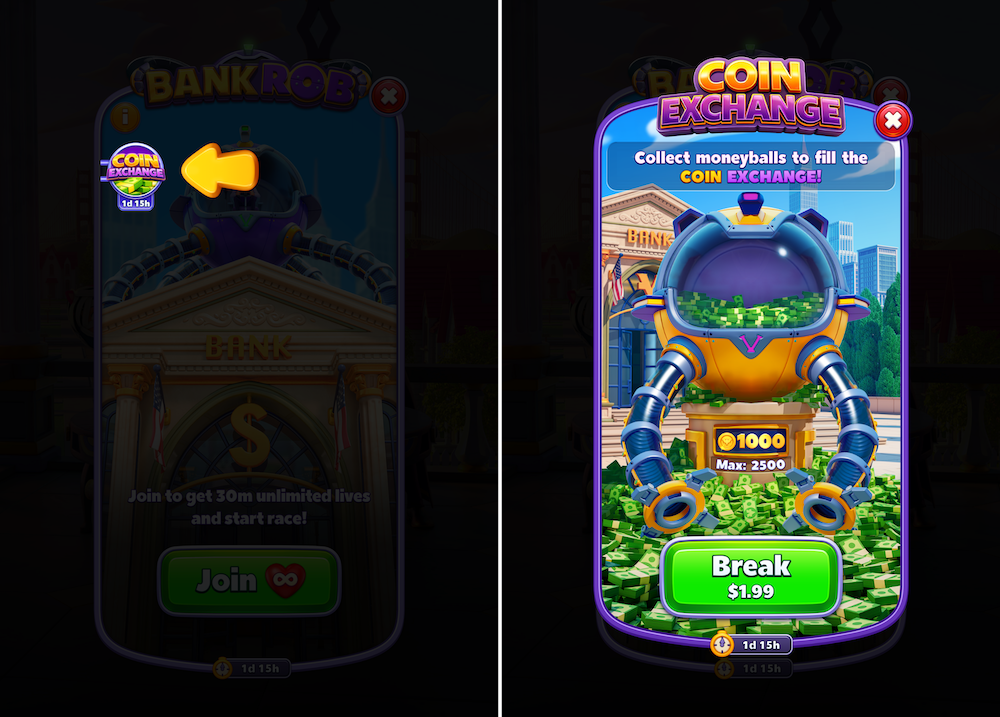
- Lastly, the Bank Rob race event introduced Coin Exchange, a Piggy Bank-style system where core gameplay progression (Moneyball collection) simultaneously increases the value of a purchasable reward pool. This ties monetization directly to event participation, allowing players to use ongoing progress to earn additional rewards.
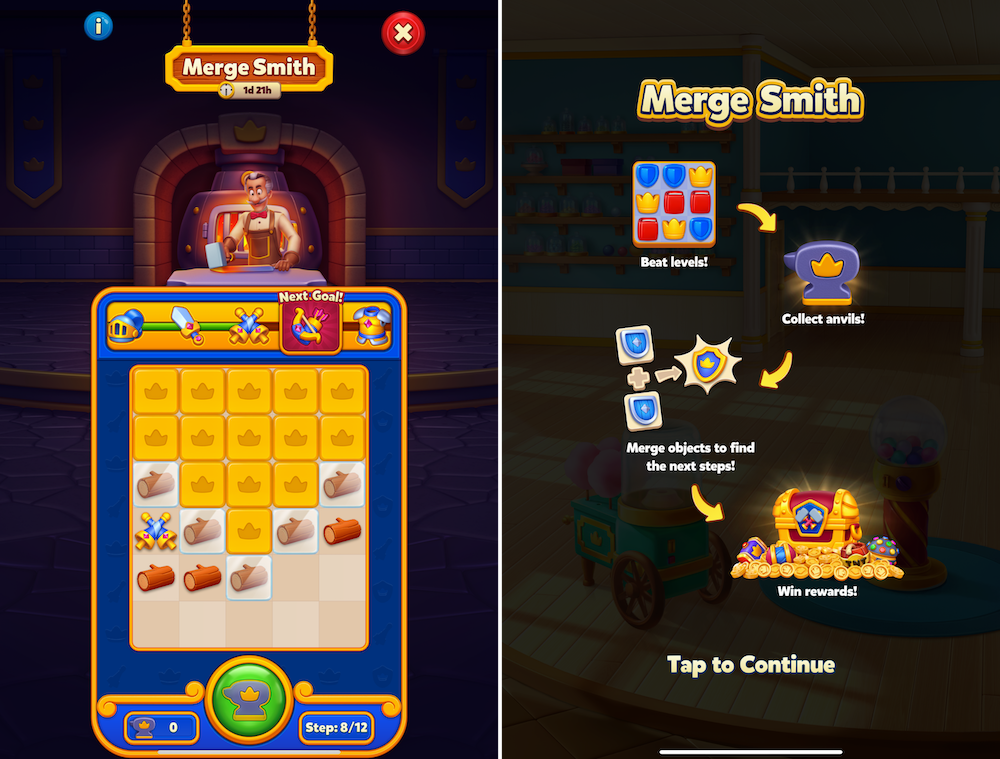
Royal Match from Dream Games is making its second attempt at introducing a trendy merge-style minigame with its new event, Merge Smith. Dream Games previously experimented with the merge minigame concept with the Wonder Festival event in November 2025, but that version followed a different design and ultimately remained a one-off. In contrast, Merge Smith has already reappeared multiple times, suggesting a more sustained rollout. It remains to be seen whether this iteration will prove more successful in the long run, as the title sees growing competition from newer games like Gossip Harbor.
Additional casual gaming highlights and news
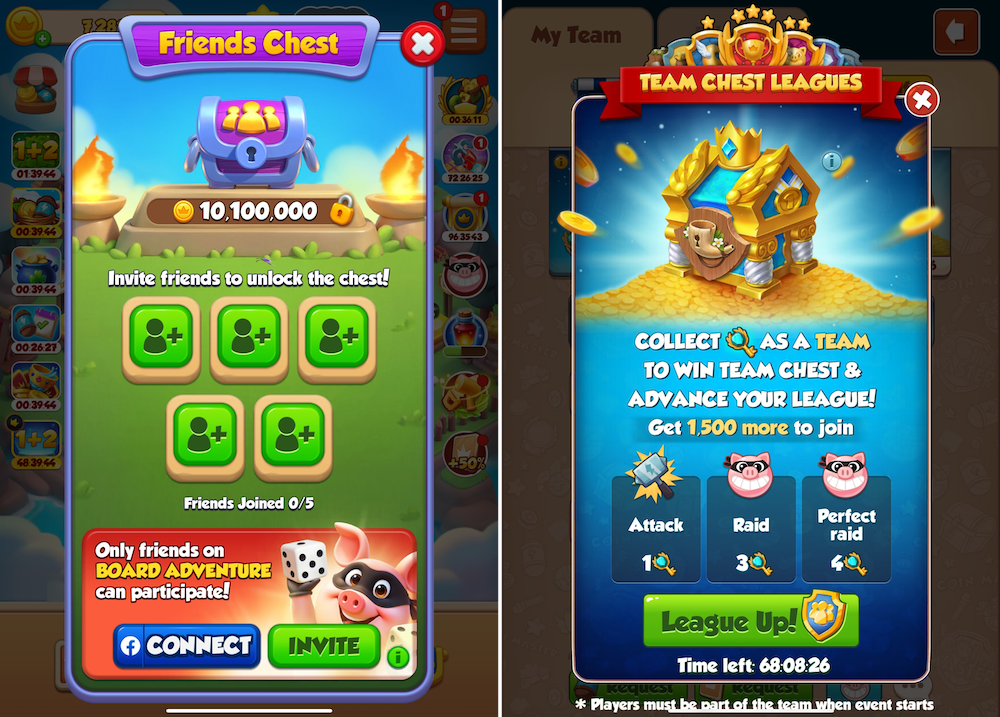
Another game worth highlighting this month is Coin Master – Board Adventure, a competitor to Monopoly Go! From publisher Moon Active that moved from outside the top 200 grossing apps to one of the 50 top-grossing games in mid-March as its downloads surged. One differentiating factor against Monopoly GO is in the game’s social systems. The game features some more traditional “guild system” features, such as Teams / Team Chests.
March’s midcore game updates
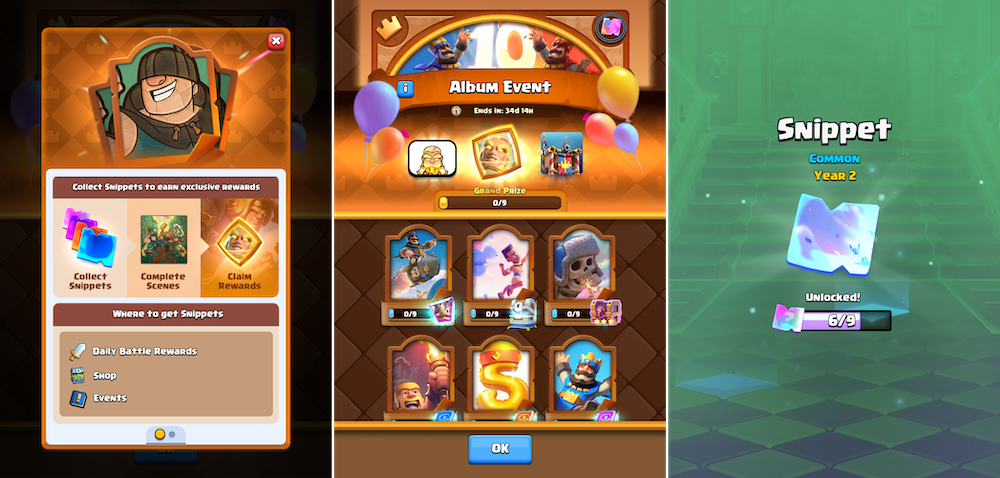
A growing trend we’ve seen amongst midcore games is the introduction of Seasonal collectibles albums. This is a gameplay element that seems to have crossed over from Casual games, but now we are seeing it used in an increasing number of major midcore titles – suggesting it’s here to stay.
Clash Royale introduced its first-ever seasonal collectibles album event: Album Event. Players had to complete nine different pictures with Snippets, which could be gained from daily wins, shop offers, events, and the webstore. If the player completed all nine pictures, they would get the grand prize: an Emote, a Tower Skin, and the Hero Magic Archer.
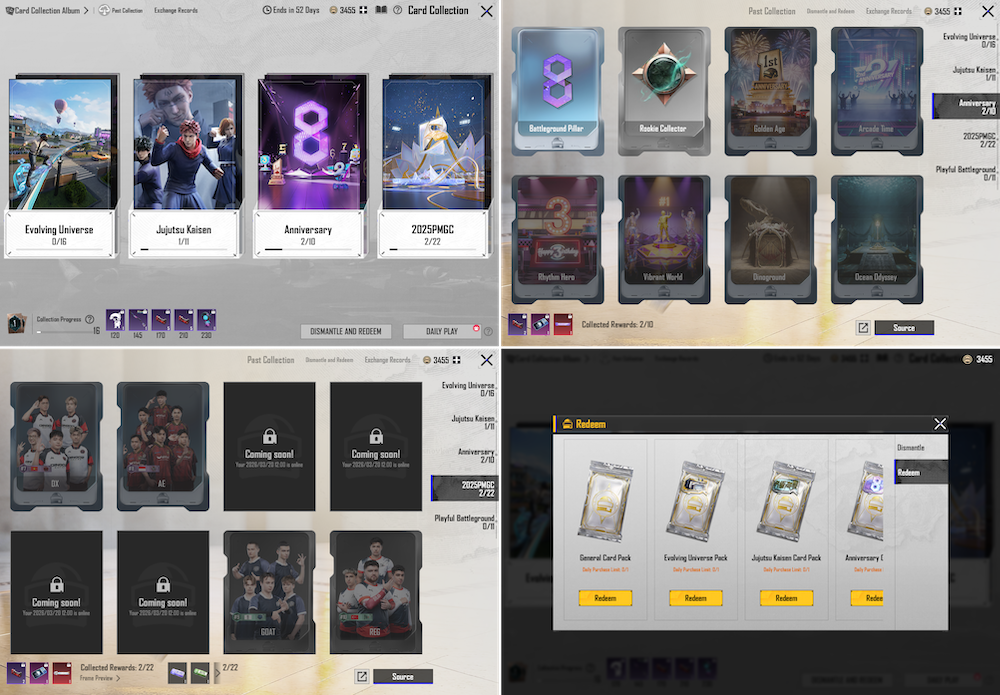
The globally popular battle royale game, PUBG Mobile, added its own version of Collectible Season Albums called the Card Collection. Players collect various themed cards through missions, draws, and exchanges. Completing card series grants players rewards, including cosmetic items and emotes. Duplicate cards can also be exchanged with others, but only for cards of the same rarity.
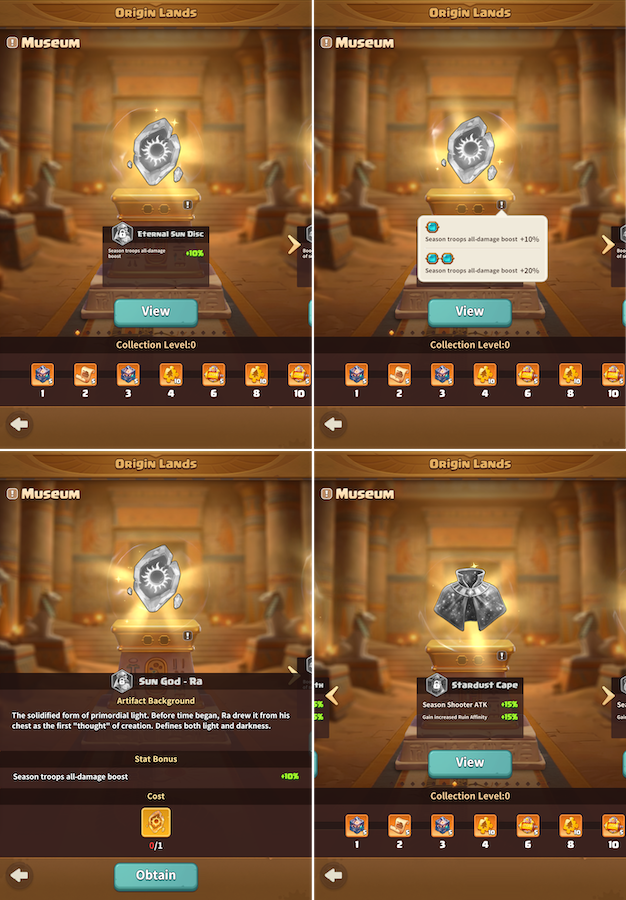
One of the more unusual additions in Dark War: Survival this month is the introduction of the Museum, a seasonal collectibles album system tied directly to the Origin Lands season.
This is the first time the game has introduced a seasonal collectibles album event and, unlike more typical collection features, this one is tied to a limited-time season where collected artifacts grant season-long buffs and milestone rewards. For example, a player who collects a particular artifact and takes it to the Museum will be rewarded with a buff that increases damage against enemy troops – and the buff stays active until the end of the season.
The feature stands out by turning the collection into a limited-time progression system, rather than a permanent feature, making it a more unique part of the season’s overall event structure.
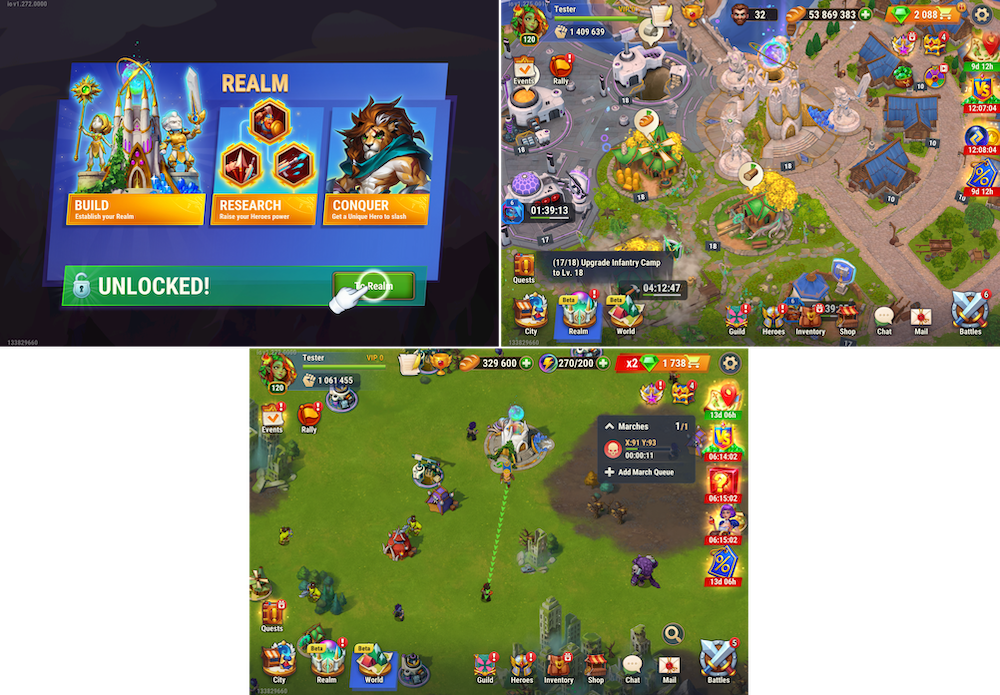
Hero Wars has introduced a new mode, Realm, where players build and develop a base by constructing and upgrading buildings such as houses and barracks, researching technologies in the Research Center, training units (infantry, spearmen, and marksmen), and generating resources that can be used across all the other progression systems. Research provides additional perks that benefit both the Realm and the player’s heroes.
The mode effectively brings a 4X strategy layer into the game, representing a notable shift for a long-running top-grossing RPG. This move aligns with broader market trends, where 4X games have been outperforming traditional RPGs, while increasingly incorporating RPG mechanics into the 4X games themselves.
Realm also features a world map where players can engage in PvE activities using their standard five-hero teams, deploy troops to fight enemies, and gather resources. The update also introduced a new hero, Lionel, tied to the Realm.
In March, no live events were introduced specifically for the mode. However, new monetization options, such as the Progress Pack (offering Realm resources), were added, alongside updates to existing events through progressive tasks, e.g., Runic Millstone.
Additional midcore gaming highlights and news
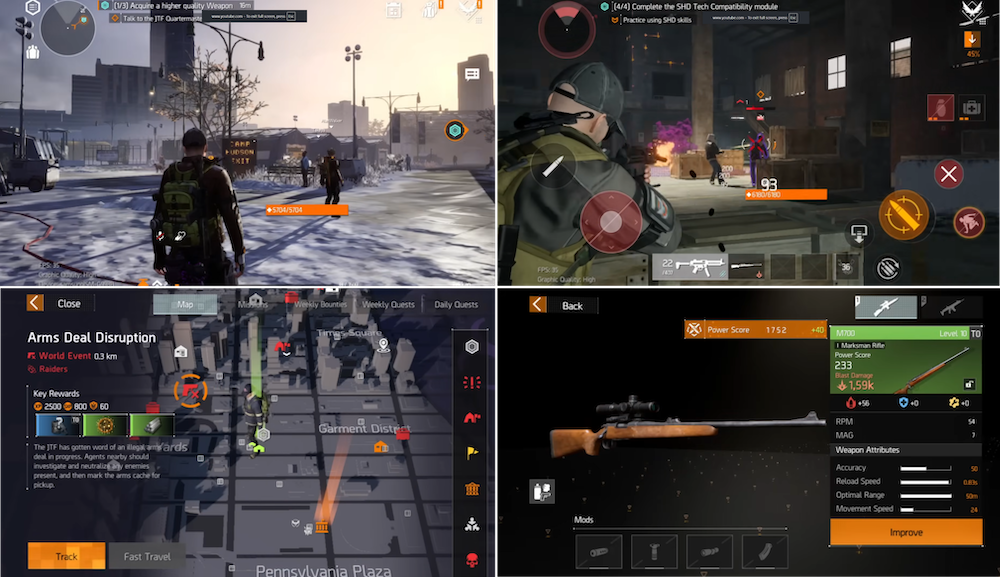
The Division Resurgence, a mobile third-person shooter RPG/MMO-like spin-off of The Division series, finally got its long-awaited global launch on March 31. The game plays similarly to the original Division titles and is built around a cover-based third-person shooting mechanic, with the story based in an open-world take on New York. There’s a brand new storyline that follows the canon of the first two console/PC games, plus solo/co-op play, PvE, PvP, and Dark Zone extraction-style gameplay.
Compared to the top-grossing mobile shooters, it stands out clearly, as many of its core systems are closer to RPG/MMO-style games such as Diablo Immortal (and, of course, the other Division games). The Division series’ RPG-like power progression is fully present here, with Agent leveling, build tuning, and gear looting and upgrade loops at the center of the meta.
Both MMORPGs and power-progression shooters have historically struggled to break out on mobile in the West, so it remains to be seen whether this long-developed, content-rich, and true to the original title has what it takes to scale further and succeed over the long term. Most other shooter-based games on mobile (for example, Call of Duty) lean heavily on cosmetics as the main form of monetization, whereas RPG games tend to monetize more around character collection, so it will be interesting to see how the game develops.
Roco Kingdom: The World (洛克王国:世界) is a new Tencent game studio fantasy MMORPG based on a popular nostalgia IP for the Chinese audience. The game has a very similar setting to Pokémon, with the player’s avatar roaming the world, either alone or with a team, capturing creatures they encounter in battle.
Visually, it also shares a similar, cute, super colorful art style. It advertises that 400+ creatures are free to catch without gachas, so the player doesn’t need to use any money to collect the creatures! The game has quickly become a hit, hitting the top spot in the Download charts and the third highest in the top-grossing.